Showing posts with label young adult. Show all posts

Wednesday, 15 July 2015

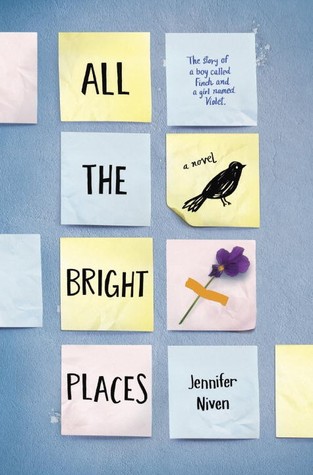
Review: All The Bright Places by Jennifer Niven

Age Group: YA
Genre: Contemporary
Pub Date: Jan 2015
Publisher: Penguin

All The Bright Places may be a book about depression, but it is anything but depressing. It deals with a lot of the stigma attached with mental illness, about the loss of loved ones, and finding hope in unexpected places.

We follow Finch, a troublemaker high-schooler who’s constantly in and out of the councillors office and school, and Violet, ex-cheerleader, ex-flute-player, ex-student-council-member. Violet is ex-perfect-student since the death of her sister nine months ago. They meet on top of a bell tower, when Violet is contemplating to kill herself. The story then follows them on a road trip to experience as many places their state has to offer.

The book isn’t by any means perfect. If you are irritated by quirky-character-syndrome, see Augustus Waters in TFioS, this may not be the book for you. Theodore Finch is obsessed by dying right from the start, telling us all about the different ways to go. He has a dramatic way of speaking, and changes his personality weekly. But he’s likeable. And so is Violet.

If you like the two comparisons that All The Bright Places was linked too: Eleanor and Park and TFioS, you will probably like this too. There’s a lot of comparisons between this and TFioS, which are fair in some respects and not in others. Yes, it has a similar style, yes it deals with usually taboo topics in YA, but they are still important topics to deal with. Niven occasionally handles the aspects of mental illness blunderingly, but from the authors note at the end, you can tell the experiences she writes about comes from truth.

All The Bright Places reminds us that between the episodes of sadness, there are pieces of hope. The book gets a bit troupe-y in places: see parent’s banning daughter, insta-love, slight case of manic-pixie-dream-girl/boy. However it throws in some brilliant ideas, the road trip is an excellent example. Violet and Finch try to pick up the pieces of themselves together, and in doing so you are reminded of the Bright Places that can exist in life.

There’s been a lot of criticism over the cotton-candy-style of writing, so I wanted to add my cents-worth. I personally liked Niven’s writing, I thought it was easy to read and differentiable between the two points of view. Niven was bold to touch a topic that hadn’t been handled much before in YA, so there is a need to make it accessible to people. Hopefully All The Bright Places will pave the way for bigger and better YA works on mental health and other stigmatised issues.

I know this sounds like a mixed review, and in all honesty I did like All The Bright Places. But maybe that’s because I’m a sucker for a quirky character and emotionally manipulating stories.


Rating: 7/10

I received a copy of this book from Penguin when I interned for them last year

Sunday, 10 August 2014

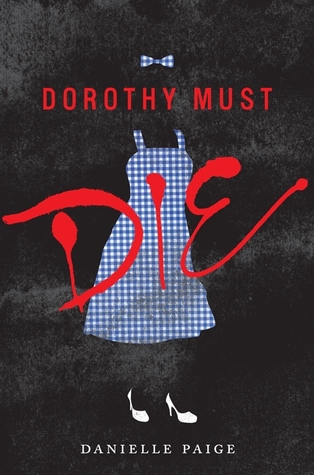
Dorothy Must Die

Dorothy Must Die (Dorothy Must Die, #1)
Age Group: YA
Genre: Fantasy
Pub Date: April 2014
Publisher: HarperCollins
                                                                                                               

Let’s start with a really shallow observation: I loved this cover. It really hit the spot with what the book was truly about; a cultural icon gone bad. I normally complain about books having a great premise and then never living up to its full potential. I’m pleased to report this is not the case with Dorothy Must Die.

Amy Gumm is a girl from Kansas (of course). Unwanted and feeling like she doesn’t belong, Amy is waiting for the day she can escape. Which she does. Through a tornado. Amy ends up in Oz with, her version of Toto, a rat called Star. But Oz is not what the Julie Garland film portrayed it to be. Gone are the chirpy munchkins and the Technicolor dreamland, replaced with darkness and despair, under the malevolent rule of Dorothy. Amy gets recruited by the Revolutionary Order of the Wicked for one task. That’s right, you guessed it, Dorothy Must Die.

Paige has altered the original world into is a fascinating one. The twists on all the well-known characters are clever, especially how the Wizards gifts have altered the Tinman, Scarecrow, and Lion. For some reason, Paige decided to overtly-sexualise Dorothy, probably a cheap shot to damage your childhood a bit more, but I’ll let that slide. It was all brilliantly twisted and morphed, from the freakish Perm-a-Smile (giving you a plastic grin) to the Tinman’s brutal army. 

The obvious comparison would be with Wicked (which I have not read, but I’ve seen the musical). While Wicked is more of a clever backstory to the Wizard of Oz, Dorothy Must Die is a whole new ballgame. The plot borders on a horror, with graphic scenes of violence, and this is a way Oz has never been imagined before. For a novel that was heavily borrowing on someone else’s world, it was really original.

Unfortunately the exceptional detail is also the books biggest downfall. It’s too long. 450 pages are way too many for this sort of novel. It felt like she was stretching it out for an unknown reason. Parts which made the novel so good, started to become wearisome.

Take Amy, I liked Amy. She was cool, and had an interesting voice. She had her flaws and she had her charms. She was well-rounded, compared to a lot of female characters I sometimes see. However after 300 pages, she started to grate on me. The sarcastic-I’m-a-fighter voice soon became I’m-trying-too-hard-by-being-sarcastic. The other issue with the writing was that there was so many colloquialisms in Oz from American culture, that made no sense for it being there. “Oz History 101” for example. Unless Oz is taking part is following the American educational system, which I doubt.

Overall I liked Dorothy Must Die. If you’re a fan of the Wizard of Oz or Wicked or just really cool retellings, and don’t mind some waffle, this book is for you. 

Rating: 8/10

I received this copy from Harper 360 in exchange for an honest review

Saturday, 18 January 2014

Love or Loathe: Love Triangles

I’m currently reading Clockwork Princess by Cassandra Clare. Currently is the operative word here, I haven’t got to the end yet, so no spoilers please! For those who haven’t read the series, The Infernal Devices features the Marmite of plot devices: the love triangle. The reason I’m bringing it up is previously to reading this series I had sworn off them, however I now have some conflicted emotions.

Love triangles are a pretty old, dating back to Romeo and Juliette, but you can say that of many plot devices, so what is it particularly about love triangles which instigate such strong feelings in people? Looking at YA in particular there have been two huge successes in the past decade: Twilight and The Hunger Games. And guess what they both have in common?

Authors and publishers latched onto this common denominator, and soon they had spread. Love triangles were the hottest new thing, and soon they were going out of style. They became overdone, clichéd. I thought there was only so much you could do with it. Two boys like a girl, she has to choose. That was it in essence. But I was wrong. You can boil down any plot like that. Going on a quest. Falling in love. Uncovering a secret.

Like anything, a story needs to be done well. And the problem is that there are too many bad love triangles out there, diluting the amount of good. But there is hope. Now and then you get a story so good, so un-put-down-able that you shouldn’t feel ashamed to find yourself going “I quite like this”. Not that you should feel ashamed, as I have long said in my battle against intellectual snobbery. So here is what I think makes a good love triangle:


  • A strong lead – Otherwise I really won’t care. Preferably a not pathetic female who spends every single waking minute agonising over the triangle.
  • Believable choices – So many times you can predict who the character is going to choose. If that’s the case, what’s the point of having the point? I would not like to predict the end of the story in the first few chapters.
  • Likeable characters – I want to be conflicted over which person I like more. I don’t want to be disappointed by either choice. 
  • More than romance – Okay, even if it a romance book, there has to be something more to the characters or their lives than their love life. It’s far more believable.
  • Unpredictable – They have a bad rep for being formulaic, so give me something more. I want twists and turns, bad guys and good guys, and lots of feelings.
What do you guys think of love triangles? Love them? Loathe them? Do you think I missed anything out of my list? Tell me below!

Wednesday, 8 January 2014

Top Books of 2013

OK, yes this post is really late. 2013 was like, so last week. But better late than never, right? So in no particular order, I bring you Rachael’s top books of 2013.

Middle Grade
The Girl Who Circumnavigated Fairland in a Ship of Her Own Making by Cathrynne Valente
When I was a kid, one of the books I would constantly read over and over again was Alice in Wonderland, and honestly, I thought nothing could come close to the wonder I felt reading a land like that. I was wrong. TGWCFiaSoHOM, on top of being a mouthful, captures the wonder of being a child, wrapped in layers of a fantastical, detailed world with a cuckoo-crazy plot.

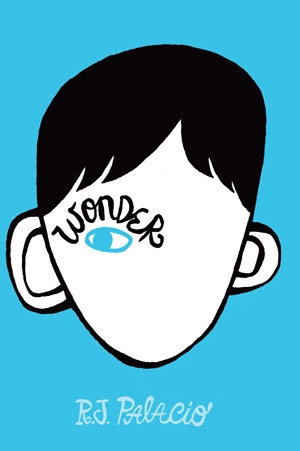
Wonder by RJ Palacio
For a book so slim, it’s crazy the amount of emotions I went through reading it. Auggie’s story of him coping with his disfigurement  is a sad one, yet ultimately uplifting, and laced with a slick sense of humour.
959139811387515

YA
The Fault in Our Stars by John Green
Do I really need to say anything about this book? If you haven’t read this book, go pick it up now! It will make you laugh, it will make you cry, and it will still resonate with you a year after you read it.

Eleanor and Park by Rainbow Rowell
I’ve never thought of myself as a romance fan, so it just shows how much I loved Eleanor and Park. The characters were so alive, and their story real and painful, that I couldn’t help but falling in love with this book.

15745753The Fault in Our Stars

Adult
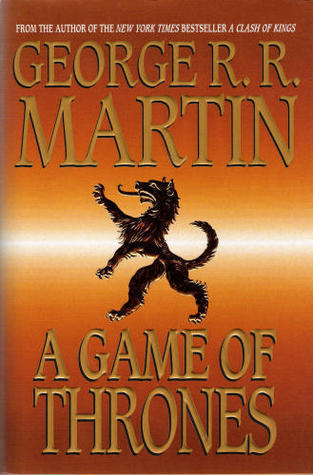
A Song of Fire and Ice by George RR Martin
Okay, technically this isn’t a book, but a series. Even if you haven’t seen the TV show, this book is worth a read. With a plot that teeters the line of a war drama and a soap opera, set in one of the most detailed lands I’ve ever read, these books keep you sucked in through their lengthy volumes.

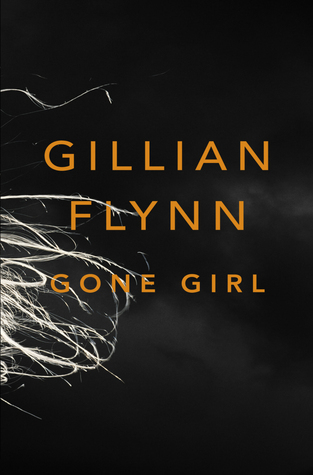
Gone Girl by Gillian Flynn
I always bang on about how much I hate predictability in books, and Gone Girl is anything but. The twists and turns in the insane story about Nick and his missing wife, not to mention the crazy, and yet terrifyingly believable, characters kept me turning the pages.
844245713496


Agree? Disagree? Have links to your own top books? Tell me down below!

Monday, 30 December 2013

Updates and YA mini-reviews

You may have noticed that I have been absent from the internet recently. You may have not. If so, I’m not offended. So where have I been? University! Wooo!

I have been having a fantastic time. Such a fantastic time, that I now have no time. Between the 22 hours of contact time, the lab reports and coursework (this is what you get for choosing science), friends and extra-curriculars, I’m finding it to keep up, and I’ve just been lazy when it’s come to updating this blog and my Youtube channel. But with New Year’s around the corner, I am now determined to a better job of keeping up this blog and (hopefully) my Youtube channel. I say hopefully for Youtube because the walls in my halls of residence are so thin! So if anyone has some advice for me please let me know below.

I have also been a lazy reader. In the 3 months I was at university, I read three books one of which was on the train to and from London. To say I’ve been in a reading slump is to put it mildly. Luckily, the Christmas holidays have snapped me out of it, and I am on a roll.

So here’s the first part of my mini-reviews of what I’ve read.

Geek Girl and Geek Girl (Model Misfit) by Holly Smale
Geek Girl (Geek Girl, #1)Model Misfit (Geek Girl #2)Geek Girl has been floating around the blogging circuit for a while and I now know why, it’s amazing! It’s funny and quirky (and not in a look-at-me-I’m-so-hipster kind of way). Harriet Manners is a geek (as you may guess from the title) and somehow ends up as a model, which of course is followed by several mishaps. I loved Harriet, especially once you peel off all the layers of facts and knowledge she was a normal, teenage girl. Geek Girl doesn’t take itself too seriously, but has a lot of heart.
I received Model Misfit from NetGalley 
Rating: 9/10

Heist Society by Ally Carter 
Heist Society (Heist Society, #1)Heist Society had an interesting concept, as we follow Kat, a retired teenage thief whose father has been framed for a crime he didn’t commit. As much as I found the plot interesting, I felt like there wasn’t much to the characters. Kat was emotionless and lacked much of a personality, and I found it hard to connect to her. Even the plot, though fast paced and clever in places, required too much suspension of belief for me to take it seriously. It was fun to read, but ultimately left me feeling let down.
 Rating: 6/10

Clockwork Angel (The Infernal Devices, #1)Clockwork Angel by Cassandra Clare 
You may have noticed that I may be a tiney-winey (ok, massive) fan of The Mortal Instruments. So shockingly, I had not read the spin-offs. The reason for wanting to avoid them is that I’m not the biggest fan of historical fiction. Eventually I gave in and picked them up. I wanted to love it. Really, I did. And I did. Sort of. I really enjoyed the steampunk Victorian setting and the fast paced plot complete with a slippery villain. I loved all the characters, from book-loving Tess, to calm Jem, to strong Charlotte. The only problem I have is that I’m getting sick of love triangles. But I have high hopes for the rest of the series!
 Rating: 9/10


I have a lot of things coming up for this blog and I will get back into the swing of things, so stick around!

Tuesday, 20 August 2013

Throne of Glass by Sarah J. Maas

13519397
Age Group: YA
Genre: Fantasy Romance
Pub Date: August 2012
Publisher: Bloomsbury
                                                                          
I had mixed feelings coming into Throne of Glass, mostly because I had been hearing a lot of different opinions about it. My conclusion is: I totally get why people love or hate it, and I really can’t decide how I feel.

Celaena Sardothien is an assassin in slavery until the Crown Prince, Dorian, pulls her out to become his champion in a competition held by his father to find the new royal assassin. Along the way, she is trained by the handsome Captain of Guard, Chaol, whilst trying to fit into the royal court. Yes, it’s a little ridiculous, but sometimes you have to shove away logic and sit back and enjoy the ride.

Let’s talk about the elephant in the room: the love triangle. Shockingly, I am not opposed to love triangles, as over-used as they are, as long as they are done well and this wasn’t the worst one I’ve read. I liked both of the male characters, and it wasn’t blatantly obvious which one Celaena was going to pick, so my issue wasn’t with the triangle itself, but more with the number of clichés used. Up-close-and-personal-training, masquerade balls, childhood-friends-turned-love-rivals… Do I need to go on? I quickly stopped reading this as a fantasy book with a healthy dollop of romance, but as a romance with a fantasy background. Which is fine, as long as the writer knows what she’s writing.

I found both the plot and writing jumpy. It felt like Maas couldn’t decide if she wanted to write a riveting romance or an action novel, and the book wasn’t long enough to accommodate both. I found the stark contrast between cute and real romance, and grisly murders really bizarre. And the writing was painful to read. It was melodramatic, over-written, and sometimes made no sense. “Her blood grew warm and glittering” is an example of the problems I had.

Once I got past the writing and accepted the crazy premises, I actually enjoyed reading the book. I really loved the characters: Dorian was fun and Chaol serious, but most importantly both seemed like they had some depth to them. As for Celaena? I liked her character, but I didn’t feel like it fitted with her story. She was cool, witty, confident, and smart, but she didn’t strike me as an assassin. As much as I liked this version of Celaena, I wanted her to be darker and grittier, as the only way I kept on remembering that she was an assassin was because everyone kept on saying it.

Throne of Glass was a guilty pleasure for me. It was good in a bad way, and I understand why so many people love it. Despite it all, I found it really addictive and fun to read. However, if you’re looking for a more meaningful read about a teenage assassin, I would look elsewhere.

Sum It Up: Romantic fantasy, which is at sometimes a bit contrived and far-fetched, but really fun to read.


Rating: 6/10

Thursday, 25 July 2013

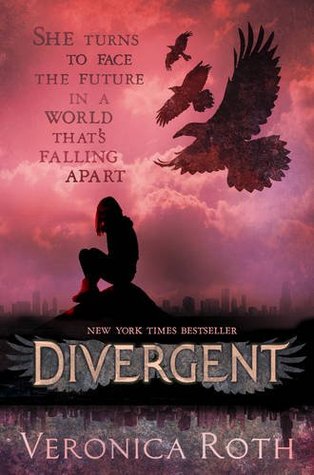
Divergent by Veronica Roth

Divergent (Divergent, #1)Age Group: YA
Genre: Dystopian
Pub Date: February 2012
Publisher: Harper Collins
                                                                            
I totally get the hype! However, I feel like it didn’t quite live up to everything I’ve seen about it. Don’t get me wrong, Divergent was a fantastic book, dull of everything I could have wanted from a dystopian novel: action, drama, and romance, and I really enjoyed it. My Youtube video explains why I didn’t feel it meet my expectations.

Divergent is about Tris, who lives in a world where everyone is divided into “fractions” based on their personality. Instead of choosing the selfless faction she was born into, Abnegation, Tris choses Dauntless, the brave nation. I really liked Roth’s world, I thought it was really clever, and thought-out, and I haven’t seen one like it. I would have liked more explanation about how the system came into place, but maybe that will happen in the sequels. 

The plot, pacing, and writing were amazing. It became addictive: I wanted to read on and on. There was never a dull moment in this book, as something was always happening. As much as the world was unique, I feel that the story wasn’t, but while I was reading it, I frankly didn’t care because I was having so much fun and there was enough twists to keep it unpredictable. The other reason why I didn’t care too much about the plot was because I felt the whole thing was about Tris and her discovery of herself.

Tris was a great female character. I often find dystopian books lose their sense of humour with the doom and gloom, but Tris was pretty funny. And good, and kind, and most importantly, flawed. I felt all of her actions were really true to her character; she was brave, yet not excessively heroic. Most importantly, despite living eons into the future, she was really relatable. She’s just a teenager struggling to find out who she is and where she belongs.

As for the romance? Well Four, Four, Four… It was impossible not to like Four. He’s got that whole bad-boy-with-a-heart-of-gold thing down. He also had great character development and loads of twists in his background. However, as much as I liked Four and Tris, I feel like there could have been some more background or development in the other characters. I would have loved to find out more about Tris’ family, or Christine, or even Eric. Roth created amazing characters, but left me hanging.

I think it’s the lack of connection I had with the other characters which gave me the emotional disconnection with most of the plot that wasn’t directly to do with Tris and Four. And this was the major flaw for me. The only emotion I felt during the whole book was “I’M SO EXCITED WHAT’S GOING TO HAPPEN NEXT”, while other dystopians have provided me with so much more.

Sum It Up: A must-read for dystopian lovers. I really loved the book, thought it was different and action-packed, but didn’t quite live up to the hype for me.

Rating: 8/10

Wednesday, 10 July 2013

Why YA is not a Scam

So yesterday, in a little corner of the internet, a debate happened on Twitter between Patrick Ness (@Patrick_Ness) and Shoo Rayner (@shoorayner). Patrick Ness is the award winning author of Chaos Walking, a dystopian YA trilogy, and Shoo Rayner writes for younger children. Rayner wrote a blog post on why he thought Chaos Walking was not suitable for children, the glamorization of violence in YA, and if YA is a genre caught up by the “glamour of Hollywood”. You can read the article here. Ness responded, and what resulted was an interesting, civil discussion between them.

I am utterly on Ness’ side with this, as I think Rayner has not acknowledged three things about YA literature. The teen reader, the purpose of reading, and why YA is necessary.

Let’s start with the teen reader, the target audience that Rayner had continuously failed to recognise. I think the confusion cropped up between the differences between teens and children. Rayner kept throwing around the fact that Ness had won the Carnegie medal (an award for children literature) despite his book being not aimed at children.

Hold up.

Legally in most countries those under the age of 18 are classed as children. Awards seem to work the same way. There are adult awards, and children awards. So under these technicalities, teenagers are children. That is why Ness’ book was in that category, because it is aimed at teenagers. Just because teenagers don’t fit into your idea of what children are, doesn’t mean they don’t exist in that category.

However, teenagers are not children under the definition of the word. We have higher cognition, understanding, and are going through some freaky changes (amiright?). And we need books to address this. For me the point of literature is not just to entertain, but to make you think and feel. So we need books that don’t talk down to us. Books that challenge us and make us think about society so when we are old enough to make a change we will. YA literature helps people who go through difficult times have something to relate to, it can give people a cause, or, in the case of Chaos Walking, make people look differently at the world.

And that’s why YA is not a scam. It’s not something made up by Hollywood to give adults something more exciting to read, or to make children grow up too fast. Books aren’t making children grow up fast. That fault is due to the internet, widespread information, and society in general. I am proud to have been a teenager in this era. In an era where I’m actually taking interest in what’s going on. Where I use information as knowledge and technology as a valuable tool. I don’t feel like I’ve “grown up” fast, and I would hate a person who does not know me to make a blanket judgement and say that I have.

I am now going to address Rayner’s idea that children and teenagers are being “conditioned to kill each other”. I’ve made it irrefutably clear several times on my Youtube channel and blog that I am a science student. I have looked this up and so far there has not been any concrete evidence of direct correlation between violence on screens and aggression in young people. So far, there has been evidence for aggression, calmness, and nothing at all. So Raynor, you’re telling me that in a medium that is less visual, it is going to affect my likelihood to be aggressive? In fact, books which portray aggressive protagonists may be helpful to society to help understand the individuals they are based on in reality. 

Novels and stories are exaggerations of real emotions and stories. That’s why they are exciting. Teenage assassin spies are brutal, but in an era of child soldiers and trafficking, are these books just not drawing parallels through issues going on in the real world to real children in far more awful consequences? We no longer live in the time of Enid Blyton, where everything will be solved by teatime and we’ll all sit down with some ginger beer. If anything the Famous Five is far more unrealistic than some modern day YA I’ve read. YA is there to address current issues, not to dwell in the irrelevant past.

As for Chaos Walking? I read The Knife of Never Letting Go when I was 14 in 2008, and continued to read on as the books were published. And I thought they were fantastic. I agree with Rayner in the respect that no, they’re not books about sunshine and unicorns, and yes they are very tragic and brutal, but unfortunately so is life for some people and children. The point of literature is to make you think and feel, as well as entertain. And boy, did those books do that.

There is a point which I do agree on in Rayner’s article. Is YA dominating children’s literature too much? I feel that for a while it has. YA is a relatively new category in the history of literature, and maybe that’s why there has been such a boom in it. When I look back to my childhood reading, I can only think of the classic books I read (okay I admit, I read a lot of Enid Blyton). Having said that, the most successful book of this generation is a middle-grade book, Harry Potter. I think middle-grade and younger children’s books are going to see a rise now that the hype of YA has died down a little. Books like Percy Jackson and the Fairyland series are excellent books enjoyed by all ages, and I think plenty is still to come.

Ness and Rayner brought up an excellent debate on Twitter, and you should check the whole thing out. However the whole issue boils down to the categorisation of teenagers by adults. We are not children, and we are not adults, but we do have a voice, and we do deserve to be heard. And that is fundamentally why YA is so important.

Sorry for the rant guys, my blood was boiling over this. Please leave some comments and join in the discussion!


Note: Rayner has written a follow up article here. I would love to rant about how he thinks scientific evidence is invalid due to who paid for it, but I won’t. 

Sunday, 30 June 2013

Updates and Monthly Wrap Up

Hey everyone,
You may or may not have noticed that I have been slightly absent from Youtube (or maybe you haven't noticed because it’s only been a week). I’m just going to cut to the point here: I’m writing a book. Even more to the point, I’m writing a book for the Hot Key Young Writers competition, which has a deadline, so I have 3 weeks to get 40000 words done.

Maybe other people can balance writing, reading. blogging, vlogging, and their day-to-day lives, but sadly, I procrastinate too much to be able to cope with all of that. This means until the 22nd July, there will be no Youtube videos from me. However, I’m still reading, and want to keep discussing books, so I will be putting more up on this blog. I’m also transferring a lot of book reviews from Goodreads to this site, so keep your eyes out for that.

Boring stuff aside, let’s talk about my reading life.

So a while ago I said I would do the 30 Day Reading Challenge. I’m going to hold my hands up here and say: I’ve failed. I don’t know what happened… Well I do know what happened, I didn’t read enough. I blame my art exam. And my laziness.
But let's just skim past over this and move over to my wrap-up.

Reading Recap

  • Life, the Universe, and Everything by Douglas Adams  (I will review the whole Hitchhikers series once I finish it)
  • A Clash of Kings by George RR Martin (same as above)
  • A Storm of Swords: Steel and Snow by George R.R. Martin
  • Eleanor and Park by Rainbow Rowell
  • The 5th Wave by Rick Yancey
  • Noble Conflict by Malorie Blackman
  • Introducing Freud by Richard Appignanesi (I have 3 Introducing guides and I’ll review all of them at once)
  • The School for Good and Evil by Soman Chainani (review up soon!)

I forgot to add The School of Good and Evil...
I’m quite impressed with myself (if I do say so myself). 8 books, including two Game of Thrones books isn’t bad for me at all.

Film Recap:

I didn’t watch many films this month, but I did see my favourite film of the year (so far), which was Much Ado About Nothing!

Monthly Favourites:

Book: Eleanor and Park by Rainbow Rowell
TV: The White Queen (BBC1) and Nashville (More 4)
Film: Much Ado About Nothing
Music: Gabrielle Aplin - English Rain (Panic Cord)

Also, I would like to know what the best blogger features are, as I would love to join in with that, so I’m open to suggestions! Actually if you have any suggestions for me with what I can do with this blog, please tell me below!


Sunday, 23 June 2013

Noble Conflict by Malorie Blackman

Age Group: YA
Genre: Dystopian/ Science Fiction
Pub date: 1st June 2013
Publisher: Random House Children

I desperately wanted to love this book because I love Malorie Blackman. I even went and met her, which was amazing and if you want to hear my feelings on the event, click here. Firstly, thank you Random House and NetGalley for the copy! I was initially disappointed with Noble Conflict, but I was glad that I kept on going, because the last half of the book was amazing.

Noble Conflict is a dystopian novel, set in the future where the Alliance is battling the Crusaders. The story follows Kasper, who is a Guardian (a police-force) as he slowly uncovers the truth about his world. I don’t know if it was because I’ve read too much dystopian fiction, but I found the first half of the novel pretty predictable. However, all was not as I had thought, and soon the twists started to kick in. Blackman has done what she does best, and created a well-structured science-fiction world, and uncovering the truth behind it was really exciting.

The writing style also took some getting used to. It was written in third person, but in the style of a teenage boy. Normally I love realistic teenager talk, but initially I found something clunky about the writing, and despite it all I found Kasper quite difficult to relate too, but he grew on me as it went on. As for the other characters, I liked Mac and Rhea, but I found most of the other Guardians irritating. I also didn’t understand why they every character talked with a gung-ho attitude, from teenagers to Voss, their commander. However, one stylistic part of the book I loved was the excerpts from “books” in that world. I thought it was a nice touch, and really helped to illustrate her themes.

And that’s one place Blackman really shines: her themes and story. Once I realised that I had been wrong about the predictability, I really started to enjoy my moments. What I love was that Blackman wasn’t afraid to do something drastic with the story. I was continuously shocked through the book, and I think it really hits home on how much do we know about the social system that we feel so protected by? Other subtler themes were creeping in too: the use of technology, the reliability of facts, death, and love.

Overall, I think Noble Conflict is a pretty decent YA novel. There’s plenty of thought-provoking content, and an interesting story within it. I would say it’s a bit like a 1984 for a younger audience. Do I think it’s to the standard of her previous work? Probably not. But don’t let that stop you reading it.

Sum It Up: A good dystopian, with brilliant ideas and themes, but if you are new to Malorie Blackman, I recommend starting with another one of her books.

Rating: 7/10

*I received this copy from Random House via NetGalley in exchange for an honest review*

Wednesday, 19 June 2013

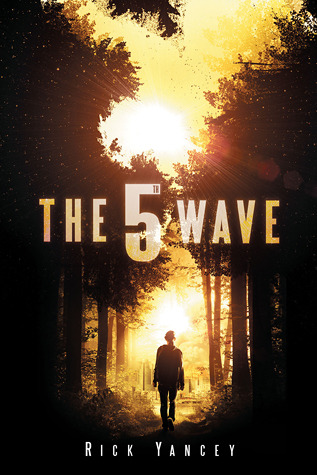
The 5th Wave by Rick Yancey

The 5th Wave (The Fifth Wave, #1)Age Group: YA
Genre: Dystopian/ Science Fiction
Pub date: 7th May 2013
Publisher: Puffin

I went to an event at Penguin HQ courtesy of World Book Day (thank you!), to see Rick Yancey talk about his new book: The 5th Wave. Youtube video about that will be up soon. But let’s get to the point here: the book itself.

Do you know how long I have been waiting for a good alien invasion YA novel? Specific I know, but nevertheless true. In a time where I’ve got a bucketful of dystopian novels raining down on me, this book was refreshing.

The 5th Wave tells the story of Earth after aliens, which our protagonist, Cassie, names “The Others”, invade and are attempting to wipe out the human race. It’s do-or-die in this world, but it more feels like die-or-die. We join Cassie as she attempts to keep a promise in a world where you can trust no one. I have to say; initially I was a bit sceptical of the book, mostly because I thought I could predict what was going to happen. I was so wrong. There was enough plot twists in this book to make your mind believe it’s playing mental Twister.

The book is written from several points of view, I’m not going to say who, but I am glad of that because it broke the book up a bit, and allowed you to see the full world from different angles. And boy, it’s a good world. As a science-fiction fan, I was impressed by the plausibility of the scenario and the differences it presented, even if I was miffed by the sweeping generalizations Yancey made of alien stories.

I really liked all the characters. There was something relatable to all of them, and the portrayal of how terror and loss can affect people differently made them and the story realistic. I definitely think the best character was Ben, his views on the world, his sense of morality, and his wit. Cassie had that funny kick-ass girl attitude, which was nice to read, but it was at her moments of weakness and doubt that I liked her the most. I have a slight criticism of the writing, in that Ben and Cassie had the same type of voice at the beginning, which felt like another generalization, but this one of teenagers, but I was pleased as Ben changed over the story, his voice felt like it did too. I loved how Yancey had a different tone to most dystopians, with jokes and attitude, but never losing sight of the seriousness of the situation.

Overall, I loved this book. It kept me gripped right to the end. In fact, I got to the last page and was like “where’s the rest?”. I cannot wait till the next one!


Thursday, 13 June 2013

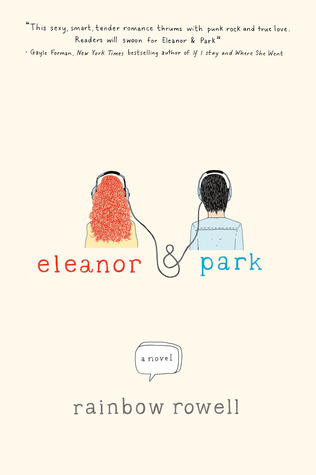
Eleanor and Park by Rainbow Rowell

Eleanor & ParkI picked up Eleanor and Park mainly because John Green had sung its praises, which of course led to the internet grabbing hold of it and joining in on the chorus. Needless to say, I went in with high expectations.

Eleanor and Park is one of the best books I have ever read.

It tells the story of Eleanor and Park (duh) and their young love in the 80’s. Eleanor comes from a broken home, and is immediately picked on as the new girl at school. Park is a half Korean misfit, who loved comics and punk music and wants to keep his head down. They fall together after she sits next to him on the bus, and the rest, as they say, is history. The plot may sound cheesy, but it’s nothing but. There are niggling little points through the story, which build up to a startling conclusion.

Eleanor and Park is really about the characters. They spoke with authentic voices and they had their own individual quirks. You could really distinct between Eleanor and Park, and see and feel their attraction and love for each other. Everyone can relate to at least one thing in one of the characters. Whether if its Eleanor’s self-consciousness, or Park’s feeling like he doesn’t fit in, Eleanor and Park touches so many topics, that it will never stop being relevant. But what I love the most about it is it is about love. It is not a story about body-image or ethnicity or broken homes, it’s about love. And it never loses sight of that.

One thing that really pleased me about this book was that it tackled a subject that I have been dying to see more in Young Adult literature: ethnicity and racism. Park is one of the first half Koreans I have seen in YA (probably the only one) and I am so glad Rowell has dealt with the issues surrounding second generation immigrants and the confusion of fitting in (you may notice that I am of Indian ethnicity).

Most importantly, Eleanor and Park made me feel. It took me on a journey with them, inside their heads, and I felt a part of the story. It was painful, it was ecstatic, it was everything being a teenager in love is like. I’m not the biggest pure romance fan, I find a lot of books in the genre to be very generic and clichéd, but I was on the edge of my mental seat, waiting for the twist and turn to come.

I could write a whole essay on why I love Eleanor and Park, but I’m going to leave it here. This book affected me right after the last page was turned, and I suggest you go out and get it.

Rating (can’t you guess?): 10/10