Showing posts with label 7/10. Show all posts

Tuesday, 29 March 2016

Review: BBC Thirteen


(This review contains spoilers)

Thirteen is compelling, but problematic in places.

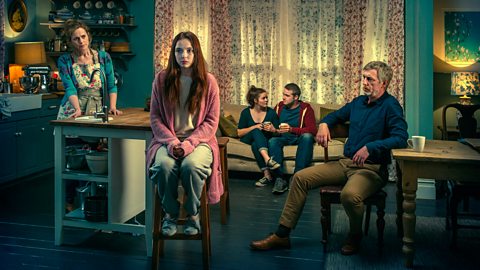
It tells the harrowing tale of Ivy, a girl escaped after being held for thirteen years captive in a basement. Each episode we gather more pieces to the puzzle of Ivy’s life as she tells her story to police as they desperately search for her captor, whilst Ivy tries to piece her life together after over a decade away from the world she knew.

When making a story about a girl who has been traumatically abused it is important to be sensitive. And Thirteen sort of is. But it’s also sort of problematic.

The good stuff is the characters. We are given a whole host of them over the 5 episodes. From the cheating father reunited with the slighted mother to reunite the family, to the married first love, and a long-lost druggie friend, it’s clear Ivy’s life is not the way that she left it. And there lies the key to the conflict that we see over all the five parts, Ivy coming to terms with the fact everything has changed and the need to pin the blame somewhere.

And it all comes to a starting revelation she screams at her captor in the final part “I used to think that it was everyone else’s fault for changing, but it’s not, it’s yours.”

Ivy’s Stockholm Syndrome was muddied from the beginning, initially brought up by D.S. Lisa Merchant, spoken like it was a crime, not a psychological condition. The main problem comes from the tension Thirteen is trying to create. We are made aware from the beginning that there are flaws in Ivy’s story. Inconsistencies are shown at every moment to keep us on the edge of our seat. But there is an odd narrative of victim-blaming from D.S. Merchant, as if Ivy had the opportunity to get out of her situation and chose not too. But Ivy is a by-product of trauma and confusion, being fed continuous lies by her captor. It all makes me a tad uneasy that a detective can’t understand the serious implications of emotional, physical, and sexual abuse. But in order to create drama, parts of Ivy’s story had to be made to be false, to prolong the hunt for her captor.

And boy, was that an intense hunt. After Mark White, the kidnapper, takes a 10-year-old child the pressure is amped up.  Then more bones are found. And when I say bones, I mean literally a skeleton in a basement. Thirteen grips you hard when it comes to finding out what happens next.

Thirteen’s masterpiece lies in how cleverly it is done. There are no extended flashbacks to Ivy’s life in captivity; even the descriptions are bare boned. Everything we take from the horrific experience Ivy had is from her behaviour and interactions with others. The tension builds through creepy phone calls and startling revelations, rather than explosions and violence.

Which is why I ultimately found the ending disappointing. Thirteen could have ended with a bang without ending with a literal explosion. It followed with none of the emotional repercussions that it felt it was ultimately building towards.

Thirteen was a great way to kick off BBC3’s online presence. Gritty, provocative, and compelling, I ended up watching 4 episodes straight this week. What makes Thirteen so powerful is the frightening likelihood of the horror of it. Children go missing all time. And we just need to look at a newspaper to see the psychos in society. And if you bear that in mind whilst watching it, that’s when the horror truly comes to life.


Rating: 7/10

Wednesday, 15 July 2015

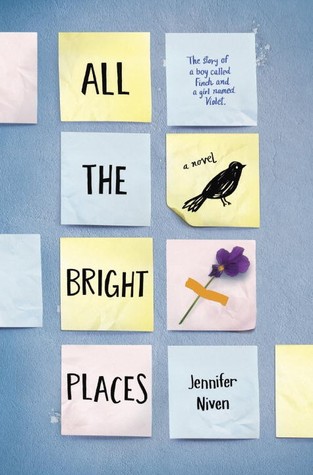
Review: All The Bright Places by Jennifer Niven

Age Group: YA
Genre: Contemporary
Pub Date: Jan 2015
Publisher: Penguin

All The Bright Places may be a book about depression, but it is anything but depressing. It deals with a lot of the stigma attached with mental illness, about the loss of loved ones, and finding hope in unexpected places.

We follow Finch, a troublemaker high-schooler who’s constantly in and out of the councillors office and school, and Violet, ex-cheerleader, ex-flute-player, ex-student-council-member. Violet is ex-perfect-student since the death of her sister nine months ago. They meet on top of a bell tower, when Violet is contemplating to kill herself. The story then follows them on a road trip to experience as many places their state has to offer.

The book isn’t by any means perfect. If you are irritated by quirky-character-syndrome, see Augustus Waters in TFioS, this may not be the book for you. Theodore Finch is obsessed by dying right from the start, telling us all about the different ways to go. He has a dramatic way of speaking, and changes his personality weekly. But he’s likeable. And so is Violet.

If you like the two comparisons that All The Bright Places was linked too: Eleanor and Park and TFioS, you will probably like this too. There’s a lot of comparisons between this and TFioS, which are fair in some respects and not in others. Yes, it has a similar style, yes it deals with usually taboo topics in YA, but they are still important topics to deal with. Niven occasionally handles the aspects of mental illness blunderingly, but from the authors note at the end, you can tell the experiences she writes about comes from truth.

All The Bright Places reminds us that between the episodes of sadness, there are pieces of hope. The book gets a bit troupe-y in places: see parent’s banning daughter, insta-love, slight case of manic-pixie-dream-girl/boy. However it throws in some brilliant ideas, the road trip is an excellent example. Violet and Finch try to pick up the pieces of themselves together, and in doing so you are reminded of the Bright Places that can exist in life.

There’s been a lot of criticism over the cotton-candy-style of writing, so I wanted to add my cents-worth. I personally liked Niven’s writing, I thought it was easy to read and differentiable between the two points of view. Niven was bold to touch a topic that hadn’t been handled much before in YA, so there is a need to make it accessible to people. Hopefully All The Bright Places will pave the way for bigger and better YA works on mental health and other stigmatised issues.

I know this sounds like a mixed review, and in all honesty I did like All The Bright Places. But maybe that’s because I’m a sucker for a quirky character and emotionally manipulating stories.


Rating: 7/10

I received a copy of this book from Penguin when I interned for them last year

Sunday, 10 August 2014

Dorothy Must Die

Dorothy Must Die (Dorothy Must Die, #1)
Age Group: YA
Genre: Fantasy
Pub Date: April 2014
Publisher: HarperCollins
                                                                                                               

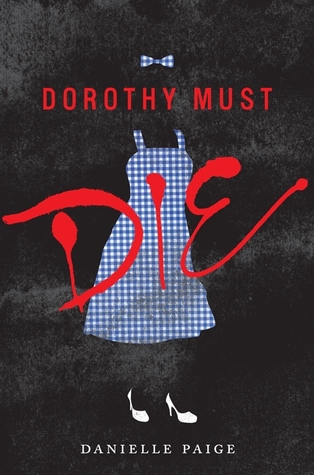
Let’s start with a really shallow observation: I loved this cover. It really hit the spot with what the book was truly about; a cultural icon gone bad. I normally complain about books having a great premise and then never living up to its full potential. I’m pleased to report this is not the case with Dorothy Must Die.

Amy Gumm is a girl from Kansas (of course). Unwanted and feeling like she doesn’t belong, Amy is waiting for the day she can escape. Which she does. Through a tornado. Amy ends up in Oz with, her version of Toto, a rat called Star. But Oz is not what the Julie Garland film portrayed it to be. Gone are the chirpy munchkins and the Technicolor dreamland, replaced with darkness and despair, under the malevolent rule of Dorothy. Amy gets recruited by the Revolutionary Order of the Wicked for one task. That’s right, you guessed it, Dorothy Must Die.

Paige has altered the original world into is a fascinating one. The twists on all the well-known characters are clever, especially how the Wizards gifts have altered the Tinman, Scarecrow, and Lion. For some reason, Paige decided to overtly-sexualise Dorothy, probably a cheap shot to damage your childhood a bit more, but I’ll let that slide. It was all brilliantly twisted and morphed, from the freakish Perm-a-Smile (giving you a plastic grin) to the Tinman’s brutal army. 

The obvious comparison would be with Wicked (which I have not read, but I’ve seen the musical). While Wicked is more of a clever backstory to the Wizard of Oz, Dorothy Must Die is a whole new ballgame. The plot borders on a horror, with graphic scenes of violence, and this is a way Oz has never been imagined before. For a novel that was heavily borrowing on someone else’s world, it was really original.

Unfortunately the exceptional detail is also the books biggest downfall. It’s too long. 450 pages are way too many for this sort of novel. It felt like she was stretching it out for an unknown reason. Parts which made the novel so good, started to become wearisome.

Take Amy, I liked Amy. She was cool, and had an interesting voice. She had her flaws and she had her charms. She was well-rounded, compared to a lot of female characters I sometimes see. However after 300 pages, she started to grate on me. The sarcastic-I’m-a-fighter voice soon became I’m-trying-too-hard-by-being-sarcastic. The other issue with the writing was that there was so many colloquialisms in Oz from American culture, that made no sense for it being there. “Oz History 101” for example. Unless Oz is taking part is following the American educational system, which I doubt.

Overall I liked Dorothy Must Die. If you’re a fan of the Wizard of Oz or Wicked or just really cool retellings, and don’t mind some waffle, this book is for you. 

Rating: 8/10

I received this copy from Harper 360 in exchange for an honest review

Sunday, 25 August 2013

One Step Too Far by Tina Seskis

Age Group: Adult
Genre: Contemporary/ Mystery
Pub Date: April 2013
17404760Publisher: Kirk Parolles
                                                                                          
If you asked me what the theme of this book was, I would have no idea. All I could say is “drama”. And that is because One Step Too Far has every type of drama possible, with a whole array of different characters.

We begin our story with Emily, a woman who is running away from her life in Chester to London, not for fame or fortune, but as a means of escape, using her handy birth name Catherine. Why? Well we have no idea. Then we meet Emily’s parents, Francis and Andrew, and we hear their problems, and then Emily’s “evil twin”, Caroline (no seriously, they’re identical twins). On top of that we have Ben, Emily’s abandoned husband, and Angel, Cat’s (Catherine wasn’t snazzy enough for her), troubled new best friend. And I haven’t yet begun on the different problems: anorexia, depression, psychosis, and that’s just Caroline. You add in everyone else’s issues and you have enough problems to fill several episodes of Jerry Springer.

All in all, One Step Too Far reads like a soap opera. Jam packed with lots of different issues, addictive to read, but at the heart of it, completely hollow. There was so much down in this book that I started to resent nearly all the characters and their miserable lives. As much as I was interested in their lives, I lacked any sort of empathy or connection to any of them. In fact, the only emotion I felt towards most of them was pity. It seems that Seskis was so focused on getting shade and depth into her characters that she forgot about the light.

Emily was our first person viewpoint, and when it jumped to another time or character the novel was in third person. This made it fairly easy to tell apart the different time periods with her, but made it quite confusing with telling apart the different points in time with the other characters. I also disliked the ridiculously long paragraphs and endless detail that Emily often provided, it was verging on stream of consciousness, and went past “setting the scene” to “irrelevant”.

I found the writing of the third person characters to be the best parts. Seskis seamlessly made very detailed, interesting (despite depressing) characters, and you could quickly spot the differences in their thoughts and voices. I found Caroline to be the most interesting, if not unlikable, and I was impressed with how Seskis really went back with Caroline’s history and how all her problems started.

It was only near the end of the book that I started to really enjoy myself. That was the point when the plot really kicked in and all the reveal came out, including one amazing omg-I-did-not-see-that-coming twist. And it was that which made it all worth it.

Overall: If you like soap operas you’ll love this book. Packed to the brim with enough drama to give EastEnders a run for its money, One Step Too Far may be a step too far, but its clever characters and interesting reveals make up for it.

Rating: 7/10

*I received this copy from Kirk Parolles via NetGalley in exchange for an honest review*

Wednesday, 24 July 2013

The World's End (2013)

Director: Edgar Wright
Producer: Nira Park, Tim Bevan, Eric Fellner
Writers: Edgar Wright, Simon Pegg
Starring: Simon Pegg, Nick Frost, Paddy Considine, Martin Freeman

File:The World's End poster.jpg
The World’s End comes from the eclectic duo Simon Pegg and Nick Frost (Hot Fuzz and Shaun of the Dead), and is the finale in their “Cornetto Trilogy” (using the world “trilogy” in the loosest sense). Gary King (Pegg), a man living in the past, is determined to reunite his old gang (Frost, Martin Freeman, Eddie Marsan, and Paddy Considine) to complete a pub crawl from their youth in their childhood town. However, all is not as it seems in their hometown, and suddenly everything turns, well, a bit apocalyptic.

It was fun, I’ll give it that. Pegg and Frost chemistry and friendship just sizzles across the screen, and there were enough jokes and character to keep it entertaining. I loved how all the characters took individual journeys and the writers were committed to having character development within all the chaos that was going on. But the main problem I had was the trailer had given away its biggest plot twist: the alien apocalypse. This meant I found the rest of the film fairly predictable, until it got to a shocking last fifteen minutes.

Plot aside; it was the characters which really made the film. There was something distinctly sorry and funny about King, who is clinging onto memories of old, and Pegg has never had a better formed character: obsessive, compulsive, and plain deluded, which makes a great comic character. Frost’s role as Andrew was the stark contrast to Gary (he hadn’t drunk in sixteen years), and he provided a clever humour, as well as a balance to everyone. The World’s End really highlighted good British comedy, within the high budget extravaganza. It was less slapstick and more witty, and you can see it shine through the American films in the same genre.

In the end, The World’s End didn’t live up to my expectations. Explosions, robots, and fight-sequences were tossed out every ten seconds and after a while the drinking and fighting got a bit repetitive. It was only the gems in between which saved it. I got that it was meant to be an alien invasion-comedy crossover, but it didn’t make enough sense to be a good alien invasion, and it was so caught up with trying to be one, that some of the comedy got left behind.

Sum It Up: Not as clever as their previous work, but still funny and with a heart. And lots of explosions.


Rating: 7/10

Wednesday, 26 June 2013

Life Ascending by Nick Lane


Age Group: Adult
Genre: Popular Science
Life Ascending: The Ten Great Inventions of EvolutionPub date: June 2009
Publisher: Profile Books

Life Ascending is an excellent scientific book on evolution. I was a bit weary picking it up, as evolution has never been one of my favourite topics to read about, but I was pleasantly surprised by this. However, I would only recommend this if you are prepared to spend a lot of reading time mulling over the past bits you have read.

Lane presents a fascinating account of the most important contributors to modern life and how they evolved. It's exceptionally in-depth, and is very well reasoned and logical. It takes you on a voyage of discovery, from the beginning of life itself right through to death. The specific chapters I enjoyed were on consciousness and eyes. The other point about the content, is that unlike many other evolution books, this one really gets down to the grit of things, and looks at it from a bio-chemistry perspective. It really delves into cells, and if you like bio-chem, check out respiration and photosynthesis chapters.

There is no picking and choosing with this book, as Lane always refers back to previous chapters, whether its a good or bad thing is your choice, however I disliked that when I returned to it to reference it, I found it impossible to understand what was going on. 

The other downside to this book is that I found the writing style very dry. It did the job of educating me, but not entertaining me. However, it has really good content, so if you like biology, or just want to know how the world works, I'd give it a go!


Sum It Up: An interesting take on evolution packed with good content, however the writing is slightly dry, and a large amount of background knowledge is needed

Rating: 7/10

Sunday, 23 June 2013

Noble Conflict by Malorie Blackman

Age Group: YA
Genre: Dystopian/ Science Fiction
Pub date: 1st June 2013
Publisher: Random House Children

I desperately wanted to love this book because I love Malorie Blackman. I even went and met her, which was amazing and if you want to hear my feelings on the event, click here. Firstly, thank you Random House and NetGalley for the copy! I was initially disappointed with Noble Conflict, but I was glad that I kept on going, because the last half of the book was amazing.

Noble Conflict is a dystopian novel, set in the future where the Alliance is battling the Crusaders. The story follows Kasper, who is a Guardian (a police-force) as he slowly uncovers the truth about his world. I don’t know if it was because I’ve read too much dystopian fiction, but I found the first half of the novel pretty predictable. However, all was not as I had thought, and soon the twists started to kick in. Blackman has done what she does best, and created a well-structured science-fiction world, and uncovering the truth behind it was really exciting.

The writing style also took some getting used to. It was written in third person, but in the style of a teenage boy. Normally I love realistic teenager talk, but initially I found something clunky about the writing, and despite it all I found Kasper quite difficult to relate too, but he grew on me as it went on. As for the other characters, I liked Mac and Rhea, but I found most of the other Guardians irritating. I also didn’t understand why they every character talked with a gung-ho attitude, from teenagers to Voss, their commander. However, one stylistic part of the book I loved was the excerpts from “books” in that world. I thought it was a nice touch, and really helped to illustrate her themes.

And that’s one place Blackman really shines: her themes and story. Once I realised that I had been wrong about the predictability, I really started to enjoy my moments. What I love was that Blackman wasn’t afraid to do something drastic with the story. I was continuously shocked through the book, and I think it really hits home on how much do we know about the social system that we feel so protected by? Other subtler themes were creeping in too: the use of technology, the reliability of facts, death, and love.

Overall, I think Noble Conflict is a pretty decent YA novel. There’s plenty of thought-provoking content, and an interesting story within it. I would say it’s a bit like a 1984 for a younger audience. Do I think it’s to the standard of her previous work? Probably not. But don’t let that stop you reading it.

Sum It Up: A good dystopian, with brilliant ideas and themes, but if you are new to Malorie Blackman, I recommend starting with another one of her books.

Rating: 7/10

*I received this copy from Random House via NetGalley in exchange for an honest review*

Thursday, 6 June 2013

The Great Gatsby (2013)

Directed by Baz Luhrmann
Produced by Baz Luhrmann, Douglas Wick, Lucy Fisher, Catherine Martin, Catherine Knapman
Screenplay by Baz Luhrmann, Craig Pearce and based on The Great Gatsby by F. Scott Fitzgerald
Starring: Leonardo DiCaprio, Tobey Maguire, Carey Mulligan, Joel Edgerton, Isla Fisher


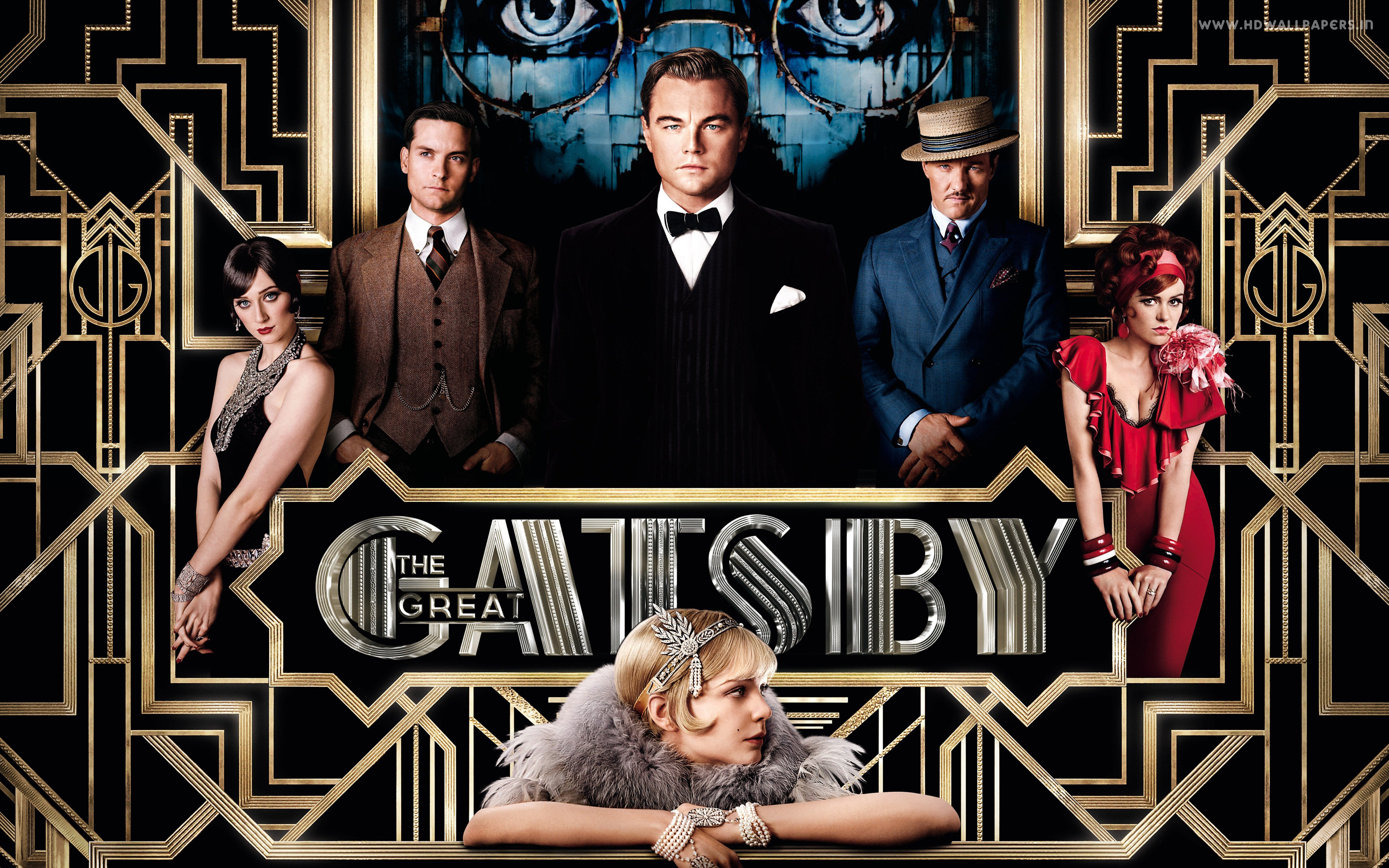
The Great Gatsby is a visual and audial assault, which takes the symbolism, words, and plot of F. Scott’s Fitzgerald’s original novel, and laces it with the glitz and glam of the roaring 20’s. As a huge fan of the novel, I was apprehensive of the film feeling like the symbolism and power of the book will be overtaken by a “Hollywood make-over”. It was, but it was a surprisingly good make-over at 

The film is extremely faithful to the book, which I applaud Luhrmann for, but I can’t help feel it was an effort to keep literary fans at bay. The tale of Nick Carraway meeting the illustrious Gatsby and being pulled into his decadent world was accurately told. Most of the language was from the novel, and the symbols within the book was carefully brought to light, however as the camera kept blatantly staring at them, they started to lose their significance. The green light, which was so vaguely mentioned in the book, an idea for the reader to ponder over, was suddenly shouted about at every moment. As for the themes, I am left unsure. There was a lot of wealth and a lot of dangerous obsession, but I feel like it did not truly transpire Fitzgerald’s message, and it was more me projecting the message I knew onto the film.

Acting wise, there is not much to say. Tobey Maguire made an apt Nick Carraway, but failed to provide much of a personality for him. Carey Mulligan was an interesting Daisy, but yet again, I feel like the actors used the 20’s setting as an excuse for not portraying half as much personality as required. The real stars was Joel Edgerton, Isla Fisher, and, of course, Leonardo Di Caprio. Edgerton’s Tom really felt like the character of the book: arrogant and prejudiced, with glimpses of human hope. As for Fisher, I wished she had some more screen time, as I found watching her as Myrtle was far more fun than reading about her. And Di Caprio? He caught Gatsby’s mystery, shadiness, obsession, and hope all at once. Maguire may have been the lead, but it was really Di Caprio who shone through.

So if the acting and adaptation standard was average, why did I find the movie so good? The answer lies with Baz Luhrmann. The Great Gatsby follows Luhrmann’s previous style of changing pace and flashy scenes, and the cinematography and visuals were phenomenal. Colour and action bloomed from every part of the screen, and the story kept on going. On occasion, it did seem a bit over the top, but generally I excused that. The soundtrack also deserves a mention. The juxtaposition between old 20’s and modern tracks, really brought forward the relevance of the themes of money, beauty, and youth to today.

I realise in this analysis it does not look like I liked the film at all. However, if you take the film without any expectations from the book, it would seem an excellent movie. On sheer entertainment factor, I enjoyed it very much. Did it capture Fitzgerald’s novel? Only if you take it on a literal sense with the words that it spilled out, but in heart I felt it didn’t. If the movie hadn’t taken itself so seriously I would have given it a higher rating, but sadly nobody likes a try-hard.

Sum It Up: For fans of Fitzgerald's book, this film will be a let down, however, if you haven't read the book, and are a fan of Luhrrman's previous work, you will undoubtedly be blown away. 

Rating: 7 /10