Showing posts with label book adaptation. Show all posts

Tuesday, 13 May 2014

1984 (play)

“Comrade Number” is printed on each ticket. The play runs for 101 minutes. So far, so symbolic.  But anyone who has read 1984 knows that there is more to the book than symbolism and plot. The novel’s intention was to make you question the world we live in, to disturb you far past the conclusion of the book; and in Robert Icke and Duncan Macmillan’s adaptation, they have ticked all the boxes to satisfy both fan and newcomer of Orwell’s famous dystopian love story between Winston and Julia.

This co-production between Headlong, the Almeida, and the Nottingham Playhouse has opened its doors to the West End, and you are initially greeted by a shabby stage, with files stacked up the sides and a dimly lit corridor behind it. Then there is the elephant in the room. When I say elephant, I mean the giant screen hanging from above the stage, a reminder of the ever-present voyeuristic government, through which you become the voyeur yourself, gaining glimpses into what goes on behind closed doors. But in true Orwellian fashion, nothing is as it seems, and the extent of Chloe Lamford’s insane set design only becomes apparent at the climatic end. Sound and lighting throw you further into Orwell’s terrifying world, the soundtrack being jarring buzzes and helicopter noises, combined with blinding flashes and blurring smoke, keeping you fully alert and uneasy.

1984 is as shocking and brutal as the book it is based upon. The cleverness in the play lies in the way we are presented the story. Instead of creating a direct word-for-word adaptation, Icke and Macmillan have approached it with the appendixes of the book in mind. We are first shown a group of scholars studying Winston’s account from the future. Was he real? Is he reliable? What can we believe? Initially it was confusing, but after looking at the questions they were asking, it is a perfect example of the themes that run through book. Doublethink, witnessing one thing, but choosing whether to believe it or not. In turn we become one of them, witnessing the play but having to make our own choice whether to believe in its current significance. We live in the age of information, but how much of it can we believe? Has anything been doctored like Winston did to so many articles? Suddenly a play set in an alternate past becomes alarmingly timeless.

Cleverness aside, the play would have not had the same impact without its outstanding cast. Sam Crane made a nervous Winston, full of fear but never wavering in his beliefs. Hara Yannas portrayed a passionate Julia, rebelling in secret through sex, whilst Tim Dutton’s master-of-disguise O’Brien lulls you into a false sense of security.

1984, the novel, was a response to the Stalinist era that Orwell was witnessing, but 1984, the play, reminds us of the continuing relevance of the story. It will shock you, frighten you, and ultimately make you question the world you think you know.

Rating: 9/10

Monday, 2 September 2013

My Life Through Book Crazes

So The Mortal Instruments has just been released, and Divergent, The Fault in Our Stars, The Book Thief, and Vampire Academy are in the pipeline. It’s clear that now’s the time for Young Adult book adaptations. So as we reread and wait, I thought I’ll take a trip down memory lane and look at the explosion of adaptations that have become a phenomena in my life so far.

Harry Potter
I guess my story, as many others my age, starts with the unforgettable series that is Harry Potter. I read The Chamber of Secrets in 1999, after seeing the press surrounding The Prisoner of Azkaban. And before you say anything, yes I read the second one before the first because my mother brought me back the wrong book. At age 6, it gave me nightmares, and I didn’t touch another Potter book for two years, until the movie release of The Philosopher’s Stone. Harry Potter was a big part of many people’s childhood, and in my case I literally grew up with it, with the last film being released when I was 17. I think the key reason why people loved it so much was because even though it was about a fantastical world, it was so relatable. And the world was astonishing! The amount of detail that was in it made you really connect with the world, and dare I say it, believe it could exist.

Twilight
The year was 2006, and I was in a bookshop when I saw a mysterious black book with white hands and an apple. I was 13 and new to YA, and this book grabbed my attention with how adult it looked. I picked it up and saw the words “vampire” and put it straight back down. For me, vampires were something out of a horror story, completely terrifying (flash-forward seven years and I still can’t watch horror films). Nevertheless, I was intrigued by the story and bought it. And I was obsessed. Back then, only Twilight and New Moon was out, so I was counting down the days to Eclipse. Honestly, I cannot remember for the life of me why I loved it so much. Maybe it was the forbidden love idea. Maybe it was because I had never read paranormal romance before. In fact, two years later, I was completely off it, so much so that I didn’t go see the movie. Not that one person’s changed attitude to it mattered, because the rest of my all-girls school had gone nuts. On the opening day, I swear my whole class flocked to the cinema. If you want to know about my current opinion of Twilight, look at my Goodreads rating for it.

The Hunger Games
Okay, I was late to the Hunger Games party; I heard about it a few months before the film was released. I have to say, I wasn’t quite as into it as other people were, I don’t know if it’s because I hadn’t read the books that long before I saw the film. But I was blown away with how different it was to all the other YA I had read before. I think the reason The Hunger Games took off like it did was because it came at the right time. Twilight-mania had died down, and after years of Bella Swan being thrust in our face, Katniss Everdeen was a breath of fresh air. There was a female heroine girls could aspire to, and an incredible action packed story for everyone to get behind. It was dark and moving, and I’m not surprised it did so well.

The Common Denominator
Nothing. Well, there is something. People buy into a good story. Oh, we’ve had flops. Beautiful Creatures and The Host being this year’s ones. I think something to note is that all of these “crazes” have happened with good time between them. Yeah, there’s been some overlap, but none of them have happened too close together.  Also all three are remarkably different from each other, which is why movie people (though I doubt any of them are reading this), should be less focused with looking for “the next…” and get something original out. I know the reason I didn’t see/ read Beautiful Creatures was because I saw the trailer and thought, “it looks like they’re trying to sell this as the next Twilight”. One other link is that people know about the book before the film. I think that’s quite easy to forget in the book community because we are always talking to people who have read the books, but an example is, despite nearly everyone I know online having read Divergent and for sure, TFioS, I know a few of my friends haven’t even heard of the books, but would definitely enjoy them.


What I’m saying is… Well, I don’t really have a point here. Since I’ve grown up with the boom in book adaptations and mania, and have been part of it, I’ve always been interested in it. It’ll be great to know what everyone else thinks on the whole matter, so leave some comments below!

Thursday, 27 June 2013

Much Ado About Nothing (2013)

Director: Joss Whedon
Screenplay: Joss Whedon and based on Much Ado About Nothing by William Shakespeare
Starring: Amy Acker, Alexis Denisof, Reed Diamond, Nathan Fillion
Rating: 12A/ PG-13


Wit, sexiness, and deception oozed out of Shakespeare’s timeless play in this modern adaptation by geek favourite, Joss Whedon. I have to say, I am a huge fan of Whedon and Shakespeare, and was eager to see what this partnership would bring. What I saw was one of the best modern Shakespeare adaptation I have seen, even surpassing, dare I say it, Baz Luhrmann’s Romeo + Juliet.
It’s very easy for Shakespeare to pass right over people’s heads if it is not performed properly. I’m happy to say, even if you are not familiar with the play, you can grasp the plot as it was executed so well. The tale goes as Benedick (Alexis Denisoff) arrives with Don Pedro (Reed Diamond) and Claudio (Fran Kranz) to the home of Leonarto (Clark Gregg). Claudio instantly falls for Leonarto’s daughter, Hero (Jillian Morgese), while Benedick and Beatrice (Amy Acker) continue their sexual tension fuelled sparring. However Don John (Sean Maher) is there to throw a spanner into the works. The rest is history. Or a 400 year old play.

Whedon fans will recognise most of the names off the cast list. Nearly every single cast member has appeared in Whedonverse. 

That’s not to say that they didn’t deserve the parts they were given. I have to say, this was an exquisitely cast film. The stars were Denisoff and Acker, playing witty partners Benedick and Beatrice, who were chock full of on-screen chemistry. I have never laughed so much at a Shakespeare adaptation then I did because of the two of them. I’m glad Whedon didn’t throw Nathan Fillion into a more central role because he was one of the biggest names there, but gave him the role of Dogberry, and him and Tom Lenk provided such a good laugh that they should consider becoming a double act.

Set in a modern day period with technology playing a part, yet shot in timeless black and white, Whedon’s direction is written all over the film. The booze and sex really glams up the play, opposed to cheapening it. There were clever and inventive background stories which played upon the Shakespearian script, such as Beatrice and Benedick’s history, and Don John’s and Conrade’s affair. Then there was the glitz and glam of the masquerade, the soliloquies with context, and the personal quality of the whole film being shot entirely in Whedon’s home. Not to mention the score. Whedon scored the film himself, and some of the songs included modernised versions of Shakespeare’s original songs for the play.

Much Ado About Nothing has the spark and chemistry of the 400 year old play, which keeps its relevance right to today. It is never overshadowed by its language and history, but instead plays with it in a quirky and dynamic way. The story is beautifully illustrated and exceptionally cast, and I am glad Whedon tossed aside high value production costs, in favour for something simpler, but no less spectacular.

Sum It Up: You like Shakespeare? Go see this. You like Whedon? Go see this. You like films? Go see this. It’s a beautiful, intelligent film, which captures the essence of Much Ado About Nothing with charm and wit.


Rating: 10/10

Thursday, 6 June 2013

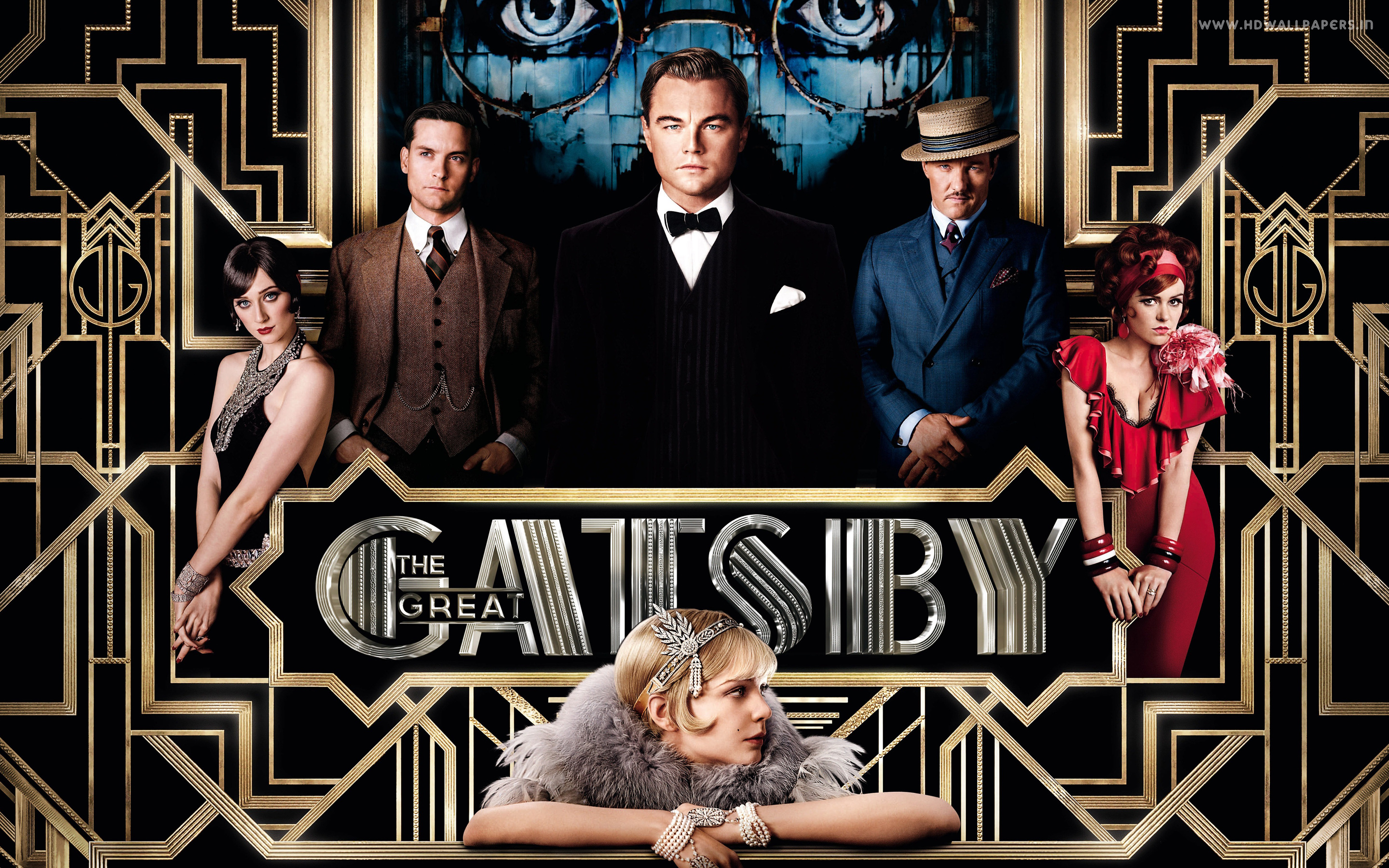
The Great Gatsby (2013)

Directed by Baz Luhrmann
Produced by Baz Luhrmann, Douglas Wick, Lucy Fisher, Catherine Martin, Catherine Knapman
Screenplay by Baz Luhrmann, Craig Pearce and based on The Great Gatsby by F. Scott Fitzgerald
Starring: Leonardo DiCaprio, Tobey Maguire, Carey Mulligan, Joel Edgerton, Isla Fisher


The Great Gatsby is a visual and audial assault, which takes the symbolism, words, and plot of F. Scott’s Fitzgerald’s original novel, and laces it with the glitz and glam of the roaring 20’s. As a huge fan of the novel, I was apprehensive of the film feeling like the symbolism and power of the book will be overtaken by a “Hollywood make-over”. It was, but it was a surprisingly good make-over at 

The film is extremely faithful to the book, which I applaud Luhrmann for, but I can’t help feel it was an effort to keep literary fans at bay. The tale of Nick Carraway meeting the illustrious Gatsby and being pulled into his decadent world was accurately told. Most of the language was from the novel, and the symbols within the book was carefully brought to light, however as the camera kept blatantly staring at them, they started to lose their significance. The green light, which was so vaguely mentioned in the book, an idea for the reader to ponder over, was suddenly shouted about at every moment. As for the themes, I am left unsure. There was a lot of wealth and a lot of dangerous obsession, but I feel like it did not truly transpire Fitzgerald’s message, and it was more me projecting the message I knew onto the film.

Acting wise, there is not much to say. Tobey Maguire made an apt Nick Carraway, but failed to provide much of a personality for him. Carey Mulligan was an interesting Daisy, but yet again, I feel like the actors used the 20’s setting as an excuse for not portraying half as much personality as required. The real stars was Joel Edgerton, Isla Fisher, and, of course, Leonardo Di Caprio. Edgerton’s Tom really felt like the character of the book: arrogant and prejudiced, with glimpses of human hope. As for Fisher, I wished she had some more screen time, as I found watching her as Myrtle was far more fun than reading about her. And Di Caprio? He caught Gatsby’s mystery, shadiness, obsession, and hope all at once. Maguire may have been the lead, but it was really Di Caprio who shone through.

So if the acting and adaptation standard was average, why did I find the movie so good? The answer lies with Baz Luhrmann. The Great Gatsby follows Luhrmann’s previous style of changing pace and flashy scenes, and the cinematography and visuals were phenomenal. Colour and action bloomed from every part of the screen, and the story kept on going. On occasion, it did seem a bit over the top, but generally I excused that. The soundtrack also deserves a mention. The juxtaposition between old 20’s and modern tracks, really brought forward the relevance of the themes of money, beauty, and youth to today.

I realise in this analysis it does not look like I liked the film at all. However, if you take the film without any expectations from the book, it would seem an excellent movie. On sheer entertainment factor, I enjoyed it very much. Did it capture Fitzgerald’s novel? Only if you take it on a literal sense with the words that it spilled out, but in heart I felt it didn’t. If the movie hadn’t taken itself so seriously I would have given it a higher rating, but sadly nobody likes a try-hard.

Sum It Up: For fans of Fitzgerald's book, this film will be a let down, however, if you haven't read the book, and are a fan of Luhrrman's previous work, you will undoubtedly be blown away. 

Rating: 7 /10