Showing posts with label discussion. Show all posts

Tuesday, 23 June 2015

Asking the Big Questions

Can society ever be fixed? That’s the central question in the two TV shows I’m watching: Humans on Channel 4 and Psycho-Pass on Netflix. In terms of format, neither of these shows have anything in common, Humans is a British drama set  in the not-so-distant future, while Psycho-Pass is a Japanese anime set in a dystopian future.


Humans takes place in a world very much like ours, but with one small addition: there exists a type of Artificial Intelligence called Synths. They look human, they act human; and they do your washing, your shopping, and look after your kids. But it’s ok, because they can’t feel. Psycho-Pass is about a future world where the overarching Sibyl System is in control, where everyone has a Psycho-Pass, which measures everyone’s mental health, and gives them a “Criminal Coefficient”, if you’re above a certain value you are a “latent criminal”, that is you have the potential to commit a crime and you’re a risk to society. It’s then the law enforcement job to neutralise latent criminals before they commit a crime for the protection of society.

But what happens when you get a Synth that can feel? And what happens when you look too closely at a “perfect system”? Both shows examine how our society works, how we interact with other people, and can society ever “be fixed”?

If we introduce Artificial Intelligence that can do everything for us, does it give us more time to be useful, or does it take away our uses? In Humans Synths initially seem like a good idea, they’re basically like servants without the pay and human flaw. But we soon uncover the unsettling effect of their presence. Causing rifts in marriages, people bonding with them like parents and child. And as we follow the journey of a set of Synths who can feel, everything takes a new spin. As Niska, a feeling Synth, yells to a Synth brothel owner “Everything your men do to me, they want to do to you”.  Clearly Synths haven’t fixed society, they’ve just alleviated some of the damaging symptoms. Do the blurred lines between what is human and what we perceive as human matter?

In Psycho-Pass, the idea is that society is already fixed. The Sibyl system is optimising everyone’s happiness; it tells you what’s the best job for you, how to keep your mental health stable, but most importantly it identifies who’s the risk to this perfect society. Is it right to enforce controls upon people who are a threat to society even if they haven’t committed a crime? Is that more important than justice? A quandary that is presented in the first episode is around victims, who get emotionally traumatised from attacked, so much that their Psycho-Pass identifies them as a risk. Can we use logical machines to evaluate humanity?


I realised I’ve just asked a lot of questions in this, which I guess is why I enjoy these shows so much. I doubt we’re going to get artificial intelligence to the point in either of these shows, but it’s always good to ask “What If?”.

Thursday, 2 April 2015

Review: The Leaders' Debate

It wasn’t David Cameron’s visit to the Queen a couple of days ago that signified the beginning of the campaigning period, it was tonight. And did we get some interesting outcomes.

The SNP shot out off nowhere like an AID’s-scapegoating comment out of Nigel Farage’s mouth (yeah, that happened). Nicola Sturgeon was a breath of fresh air backing up her opinions on everything from immigration to education. The issue of the debate was that despite the range of policies on offer, most people (*cough* Nigel Farage especially *cough*) failed to consistently give sound reasoning on why their policies would 1) be best, and 2) be implemented.

Which is why Green’s Aussie Natalie Bennett fell down. As much as she’s the liberals' sweetheart, giving us a lot of ideas (most of which are pretty nice and true), the Green’s have yet to prove how any of their policies would, well… work. It follows Bennett’s previous disaster on LBC, and although she pulled herself back, the lack of clarity of where the Green’s would get the money from, bar taxing the rich, means they have a long way to go.

Speaking of the rich, let’s look at their poster boy, and current PM, David Cameron. Probably the best speaker in the room, Cameron exudes the authority that he should be in charge, unlike his slightly hapless-looking counterpart, Ed Milliband. Cameron stuck to his guns, no doubt pleasing the Tory supporters, and his echoing words of that Britain needs a stronger economy played through the debate.  Milliband did well, but shockingly neither the PM or Leader of the Opposition gave us anything as interesting as the anti-establishment parties, or enough to out-perform the other, meaning the polls are going to be as tight as ever.

Oh yeah, Nick Clegg. Sadly slightly forgettable, but I don’t know if I’m biased as a 21-year-old-student paying three times the amount of debt of someone a year older than her. Okay, bias aside, Clegg wasn’t bad. But he needed to be better than okay. The problem is, Clegg is never going to rip himself away from the fact that he’s been supporting a right-wing government, so any attempts to move back to the liberal centre-left where the party belongs is not going to sit well with voters. Not good enough, deputy PM. Sadly, I'm going to group Wood in here too, although she did make a good impression on Twitter, and hopefully on Wales, Plaid Cymru was useful to highlight the plight of Wales, but failed to live up to her Scottish counterpart.


As for Farage, I’m not going to give him any more airtime than he deserves.

Thursday, 22 January 2015

Defying Expectations: Science Biopics

Recently our appetite for science-fiction has been insatiable. From the Marvel franchise to Interstellar, we love to watch people push the boundaries of science. But what about the real-life scientists superheroes, without which the modern world would be very different? Science has always been the unglamorous sibling of humanities in culture, with many filmmakers being first to the post with biopics of their heroes; recent ones on the Beat Generation (Kill Your Darlings) and Alfred Hitchcock (Hitchcock), but now it’s the scientists turn to step into the limelight, with both The Imitation Game and The Theory of Everything sweeping up handfuls of awards.

It’s no secret that I’m a scientist, both particle physics and mathematics are topics I study, so I was excited to see scientists make it to the big screen. The Imitation Game follows Alan Turing (Benedict Cumberbatch) codebreaking discoveries to eventually founding the beginnings of computer science, whilst The Theory of Everything follows Steven Hawking’s struggles with his disability, and the pressure of it and his work upon his marriage.

There’s an ill-informed idea that science is inaccessible for the majority of people, which is why it’s probably taken so long to produce a film on scientists. But both of these films deal with extraordinary minds and overcoming incredible adversity, and people will buy into a good story no matter what the content. Despite it being about scientists, there’s very little science, both of these films are ultimately about the humanity and challenges that faced two men, who revolutionised the world we live in.
Both men are mind-boggling. As The Imitation Game progresses, you get more of an insight into how challenging it was to break the Enigma Code, and the hard work and genius needed to do it, fathering the computer, only for to see Turing, a war hero, life destroyed by the horrific penalties for being gay. As for Hawking (Eddie Redmayne), a man who was given two years to live; continued with his life, marriage, and work, and year after year kept defying everyone’s expectations, whilst changing the way we understand time and space.


Maybe the audience is becoming more comfortable with science. Now with children learning to code based upon the work of Turing, and Hawking’s book A Brief History of Time and Space is one of the biggest bestsellers, science has become more accessible. And let’s not forget the endless fascination with science-fiction. People are starting to question more, wanting to understand more about the world and future discoveries that may impact their lives. And if that’s not science, I don’t know what is.

There’s a criticism that we raise actors and musicians to unnecessary heights, in a way we don’t for extraordinary people like, say brain surgeons. Whilst I don’t think the social construct is going to change anytime soon, I’m glad that we’re drawing some attention to the  real life superheroes who have led lives which without we would be living very differently.

Now maybe they could do a film on a woman, ey? Marie Curie or Ava Lovelace coming soon?

Monday, 25 August 2014

Pop Confessional: A Brief History of My Music Taste

I like pop music. There I’ve said it. Call the hipster-army-brigade and get them to arrest me. I admit to surfing the mainstream.

And this is something that has taken me a while to come to terms with. The reason it took me so long to come to terms with it, is because I was acting far more pretentiously than I had any right to be.

There’s nothing wrong with liking or disliking anything. Everyone is entitled to have their own opinions. Something I’ve ranted about previously is when people start to enforce their opinions onto someone else to make them feel lesser. In the video it’s about preferring YA to classic fiction, in this it’s about preferring mainstream pop to whatever’s “cooler”.

I’m not saying pop music has more artistic merit, or is cleverer, or is better than any other type of music. I’m saying I get a personal pleasure from it, which shouldn’t be taken away from me by someone saying what I feel is “stupid”.

I say this as a person who previously scorned pop, choosing to plug in my headphones instead of giving it a chance.

My story starts in the 90’s and early 00’s, the decade of my birth, and the years of Backstreet Boys, S Club 7, and Britney Spears. At a child who’s age was yet to enter double-digits, I had no problem with my jam being “Reach For the Stars”. I grew up on cotton-candy pop and loved it.

The dark ages appeared in the form of my teenage years. I thought I was getting more angsty and grungier in music taste, but only in my head. For my thirteenth birthday I got a mini stereo-system and my love with music was sealed. As I went through my teen years, my music taste rapidly changed from bubblegum pop, to more pop-rock, to just rock. A good indicator is the first albums I got with my stereo system: Avril Lavigne, The Red Hot Chili Peppers, Razorlight, and Green Day. (I know, it's a strange selection).

I went hardcore with my music taste. I wanted to like “good” music. Except I had no idea what good music was. Since everyone I knew was listening to rock, I assumed that was it. I bought Linkin Park, Blink 182, and Sum 41. I felt proud of myself. This was what is good, right?

In 2009 I heard a musician who was initially was a guilty pleasure, and then became a proud love of mine. Taylor Swift released “Love Story”. There was something sincere in what she sang, something catchy, and a country-twang that brought me to my childhood when my parents blasted out Shania Twain (if anyone taught me not to care about my music taste, it was them).

I was ashamed. But I couldn’t work out why. Taylor Swift wrote all her songs, like the rest of the artists I listened too. Her songs had a story and meaningful lyrics, which I could relate too. I found her music fun to listen to. And then I realised that I had no reason to be ashamed, I was allowed to like whatever I wanted to, other people’s opinions be damned.

And then I had a country music phase, but we won’t go into that.

My music taste currently is a combination of a lot of things from my musical past. You can find everything from Mumford and Sons, to Katy Perry, to 30 Second to Mars on my iPod. And if anyone tells you that you shouldn’t like something, to quote T-Swift, “haters gonna hate, hate, hate… Shake it off”.

P.S. If anyone wants to try something new, here’s The Pierces, an amazing folk-rock band.


Sunday, 25 May 2014

Gove Away

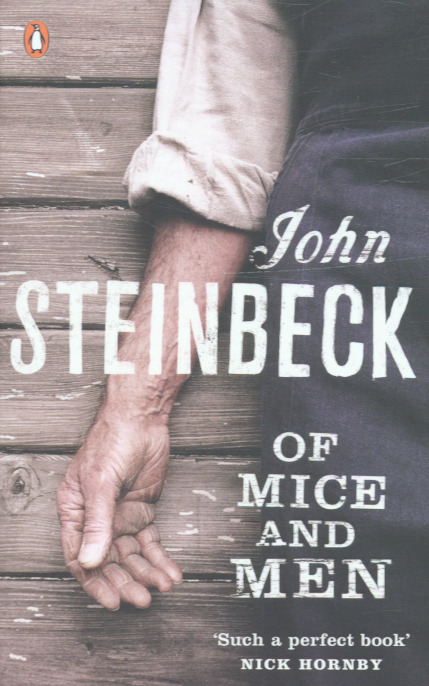
Michael Gove is the Secretary of Education in the UK, and is one a one-man mission to reform the British education system; his latest idea being to scrap all American Literature from the English Literature GCSE syllabus, including works like To Kill a Mockingbird, and Of Mice of Men. Gove’s reasoning is that he wants British students to study more works by English authors, preferably 19th Century, like Dickens.

Before we get into the main issues, I would like to point out that the furthest qualification I have in English Literature is a GCSE, much unlike Gove’s Oxford degree in the subject. However, as you may tell by this blog, I am an avid reader, and off my own back I have read Shakespeare to Austen to Orwell.

I didn’t study any American Literature during GCSE English GCSE, living out Gove’s dream. I read Romeo and Juliette, An Inspector Calls, Jane Eyre, and Lord of the Flies. I did not enjoy any of them, yet this is the proposed syllabus Gove is insisting upon. Meanwhile, I watched other classes study Of Mice and Men and To Kill a Mockingbird and discuss how interesting they found the story, which resulted me in picking up the books myself.

To Kill a Mockingbird was an extremely important book for me personally. It was the first book I had read which really tackled race in a real world setting, and although it wasn’t a true story, I knew it reflected the attitudes of the time. I remember having to Google the significance and symbolism of the novel because I knew it had so much more to offer, and I really wish I had an opportunity to study it at school. Most importantly, I can’t think of a single British classic that deals with race in the same way. And that’s why a variety of books is important, as great as British Literature is, not everything is covered in the same way.

Michael Gove is out of touch with the current situation that the average student lives in. Not everyone is a privately-educated, Oxford-bound student. The vast majority of students need to be engaged with literature by letting teachers having a variety of choice to make the decision of what is the best book for their class to study. I knew people at school who didn’t even read the books at GCSE, getting grades off a mix of Sparknotes and highlighted quotes. Instead of talking about the 19th century, we need to be engaging teenagers with familiar themes that they can relate to, whether it be the inequality of the Deep South, or the financial turmoil faced in Steinback’s novel. A mad wife in the attic is the least of anyone’s concerns.

Saturday, 18 January 2014

Love or Loathe: Love Triangles

I’m currently reading Clockwork Princess by Cassandra Clare. Currently is the operative word here, I haven’t got to the end yet, so no spoilers please! For those who haven’t read the series, The Infernal Devices features the Marmite of plot devices: the love triangle. The reason I’m bringing it up is previously to reading this series I had sworn off them, however I now have some conflicted emotions.

Love triangles are a pretty old, dating back to Romeo and Juliette, but you can say that of many plot devices, so what is it particularly about love triangles which instigate such strong feelings in people? Looking at YA in particular there have been two huge successes in the past decade: Twilight and The Hunger Games. And guess what they both have in common?

Authors and publishers latched onto this common denominator, and soon they had spread. Love triangles were the hottest new thing, and soon they were going out of style. They became overdone, clichéd. I thought there was only so much you could do with it. Two boys like a girl, she has to choose. That was it in essence. But I was wrong. You can boil down any plot like that. Going on a quest. Falling in love. Uncovering a secret.

Like anything, a story needs to be done well. And the problem is that there are too many bad love triangles out there, diluting the amount of good. But there is hope. Now and then you get a story so good, so un-put-down-able that you shouldn’t feel ashamed to find yourself going “I quite like this”. Not that you should feel ashamed, as I have long said in my battle against intellectual snobbery. So here is what I think makes a good love triangle:


  • A strong lead – Otherwise I really won’t care. Preferably a not pathetic female who spends every single waking minute agonising over the triangle.
  • Believable choices – So many times you can predict who the character is going to choose. If that’s the case, what’s the point of having the point? I would not like to predict the end of the story in the first few chapters.
  • Likeable characters – I want to be conflicted over which person I like more. I don’t want to be disappointed by either choice. 
  • More than romance – Okay, even if it a romance book, there has to be something more to the characters or their lives than their love life. It’s far more believable.
  • Unpredictable – They have a bad rep for being formulaic, so give me something more. I want twists and turns, bad guys and good guys, and lots of feelings.
What do you guys think of love triangles? Love them? Loathe them? Do you think I missed anything out of my list? Tell me below!

Wednesday, 10 July 2013

Why YA is not a Scam

So yesterday, in a little corner of the internet, a debate happened on Twitter between Patrick Ness (@Patrick_Ness) and Shoo Rayner (@shoorayner). Patrick Ness is the award winning author of Chaos Walking, a dystopian YA trilogy, and Shoo Rayner writes for younger children. Rayner wrote a blog post on why he thought Chaos Walking was not suitable for children, the glamorization of violence in YA, and if YA is a genre caught up by the “glamour of Hollywood”. You can read the article here. Ness responded, and what resulted was an interesting, civil discussion between them.

I am utterly on Ness’ side with this, as I think Rayner has not acknowledged three things about YA literature. The teen reader, the purpose of reading, and why YA is necessary.

Let’s start with the teen reader, the target audience that Rayner had continuously failed to recognise. I think the confusion cropped up between the differences between teens and children. Rayner kept throwing around the fact that Ness had won the Carnegie medal (an award for children literature) despite his book being not aimed at children.

Hold up.

Legally in most countries those under the age of 18 are classed as children. Awards seem to work the same way. There are adult awards, and children awards. So under these technicalities, teenagers are children. That is why Ness’ book was in that category, because it is aimed at teenagers. Just because teenagers don’t fit into your idea of what children are, doesn’t mean they don’t exist in that category.

However, teenagers are not children under the definition of the word. We have higher cognition, understanding, and are going through some freaky changes (amiright?). And we need books to address this. For me the point of literature is not just to entertain, but to make you think and feel. So we need books that don’t talk down to us. Books that challenge us and make us think about society so when we are old enough to make a change we will. YA literature helps people who go through difficult times have something to relate to, it can give people a cause, or, in the case of Chaos Walking, make people look differently at the world.

And that’s why YA is not a scam. It’s not something made up by Hollywood to give adults something more exciting to read, or to make children grow up too fast. Books aren’t making children grow up fast. That fault is due to the internet, widespread information, and society in general. I am proud to have been a teenager in this era. In an era where I’m actually taking interest in what’s going on. Where I use information as knowledge and technology as a valuable tool. I don’t feel like I’ve “grown up” fast, and I would hate a person who does not know me to make a blanket judgement and say that I have.

I am now going to address Rayner’s idea that children and teenagers are being “conditioned to kill each other”. I’ve made it irrefutably clear several times on my Youtube channel and blog that I am a science student. I have looked this up and so far there has not been any concrete evidence of direct correlation between violence on screens and aggression in young people. So far, there has been evidence for aggression, calmness, and nothing at all. So Raynor, you’re telling me that in a medium that is less visual, it is going to affect my likelihood to be aggressive? In fact, books which portray aggressive protagonists may be helpful to society to help understand the individuals they are based on in reality. 

Novels and stories are exaggerations of real emotions and stories. That’s why they are exciting. Teenage assassin spies are brutal, but in an era of child soldiers and trafficking, are these books just not drawing parallels through issues going on in the real world to real children in far more awful consequences? We no longer live in the time of Enid Blyton, where everything will be solved by teatime and we’ll all sit down with some ginger beer. If anything the Famous Five is far more unrealistic than some modern day YA I’ve read. YA is there to address current issues, not to dwell in the irrelevant past.

As for Chaos Walking? I read The Knife of Never Letting Go when I was 14 in 2008, and continued to read on as the books were published. And I thought they were fantastic. I agree with Rayner in the respect that no, they’re not books about sunshine and unicorns, and yes they are very tragic and brutal, but unfortunately so is life for some people and children. The point of literature is to make you think and feel, as well as entertain. And boy, did those books do that.

There is a point which I do agree on in Rayner’s article. Is YA dominating children’s literature too much? I feel that for a while it has. YA is a relatively new category in the history of literature, and maybe that’s why there has been such a boom in it. When I look back to my childhood reading, I can only think of the classic books I read (okay I admit, I read a lot of Enid Blyton). Having said that, the most successful book of this generation is a middle-grade book, Harry Potter. I think middle-grade and younger children’s books are going to see a rise now that the hype of YA has died down a little. Books like Percy Jackson and the Fairyland series are excellent books enjoyed by all ages, and I think plenty is still to come.

Ness and Rayner brought up an excellent debate on Twitter, and you should check the whole thing out. However the whole issue boils down to the categorisation of teenagers by adults. We are not children, and we are not adults, but we do have a voice, and we do deserve to be heard. And that is fundamentally why YA is so important.

Sorry for the rant guys, my blood was boiling over this. Please leave some comments and join in the discussion!


Note: Rayner has written a follow up article here. I would love to rant about how he thinks scientific evidence is invalid due to who paid for it, but I won’t.