Showing posts with label 8/10. Show all posts

Tuesday, 30 June 2015

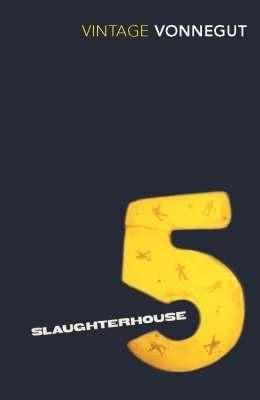
Review: Slaughterhouse-Five by Kurt Vonnegut

Age Group: Adult
Genre: Who knows
Pub Date: 1950
Publisher: Vintage

“All this happened, more or less.” The first line of Slaughterhouse-Five is a warning of how Vonnegut will blur the lines between fiction and reality throughout the book.

The narration of Slaughterhouse-Five is a peculiar one. This is a fine example of meta-fiction, the first chapter follows the author (who we can presume to be Vonnegut, but could be as fictional as the Tralfamadorians who turn up later in the book) and then of his book, The Children’s Crusade, which is about a World War II soldier, Billy Pigram, and his time-travels through past, present, and future. Oh yeah, and there are aliens. And the author keeps turning up in the novel that he has written.

It’s all a bit confusing at first.

It feels like Vonnegut is trying to make a statement. And that statement is to abandon everything you think you know. The reason Slaughterhouse-Five was so initially confusing was because I kept trying to label it in my head. “Okay,” I thought, “This is a meta-fictional, black comedy, war story”. And then time-travel appeared. And then the Tralfamadorians turned up.

Once you give up on trying to understand the story, you can focus more on what the story is trying to say. And it says a lot of important things.

At the heart of it, Slaughterhouse-Five is a war story, and although there are a lot of comedic elements to it, the recurring reminder of death (so it goes) is through it. The awful events of Dresden seriously affects Billy Pilgrim, so much that it distorts his reality through post-traumatic stress. Vonnegut paints it clear that he does not condone war at all, and that although this is a work of fiction, the self-referencing in the times of war shows that he knows what he’s talking about.

Then there’s the concept of time. And the helplessness you have against it. Billy Pilgrim is zapped around time without having any control over it, but there’s some hope within it. As time is presented as non-linear, yet set completely in stone, the Tralfamadorians remind us although we can chose to dwell on the bad times presented at us, we should also remember the good. Or Vonnegut could be saying that this is just an excuse for ignoring the horrors in front of us.

Different people will take different things from Slaughterhouse-Five, just as people have different opinions on Billy Pilgrim. Was he deluded? Suffering from post-traumatic stress? Or did he really see aliens? With the blurred lines between fiction, genres, and reality, we will never know, but Vonnegut gives us plenty to think about.

Rating: 8/10

Sunday, 19 April 2015

Miss Saigon (play)

When the two main characters have fallen in love in the first 15 minutes of a musical, you know it’s only going to go emotionally downhill from there.  

I went into Miss Saigon knowing two things: it was about an American soldier who fell in love with a Vietnamese girl during the Vietnam war, and that it had an original run on the West End 25 years ago. After the show I found out another fact that explained a lot; Schönberg and Boublil created it, the same two men who gave us the barrel-of-laughs musical that is Les Misérables.

Quick warning, this is not a musical you want to see with your parents. Unless you are comfortable watching with your parents women in their underwear dance in a brothel, which you may be.

As with Les Mis, Miss Saigon is sung-through, unrelenting in giving us teary power ballads and dance numbers. But unlike Les Mis; hell, unlike most good musicals, Miss Saigon lacked any standout tracks, which is odd for a musical where the music doesn’t stop. There was nothing that I was humming for days after.

But what it lacked in musical panache, it made up with excellent story telling. Miss Saigon took you on a journey with Kim, the young Vietnamese prostitute, and her doomed love with Chris, the American GI. Eva Noblezada played Kim, giving an astonishingly moving performance from someone who has never had a professional theatre role before. Another stand-out performance was Jon Jon Briones as the Engineer, who’s mix of sleaze and humour never stopped to entertain.

The staging took you into the depths of Saigon, from the seedy Dreamland Club, to the infamous helicopter scene outside the American Embassy, intersected with trips to America and Thailand. It was the little touches that really impacted the underlying serious tone of the musical. The point where Saigon transitioned to Ho Chi Minh was marked with a militaristic dance in front of a giant golden face of Ho Chi Minh, only to be replaced later in the play with a gaping face of the Statue of Liberty while the Engineer dances in front of it singing about the American Dream. We are left wondering if the Engineer is left yearning for an ideal of a place that is a reflection of the one he left behind.

Miss Saigon is full of morally questionable characters. We are tricked into liking those who have committed crimes, disliking those who have done nothing wrong. In the world of war, Miss Saigon never fails to remind us there are no victors.


Rating: 8/10

Friday, 11 July 2014

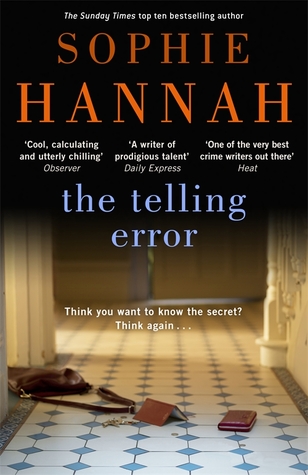
The Telling Error by Sophie Hannah

Age Group: Adult
20747666Genre: Psychological Thriller/ Crime
Pub Date: April 2014
Publisher: Hodder & Stoughton

The first few pages of The Telling Error described a grisly murder. A man has been killed, with a knife taped to him, except there he wasn’t killed by the knife. Bang in some mysterious writing on the wall, a few bizarre photographs on the computer, and the victim being a celebrity, and we’ve got ourselves an unusual case. What makes it more unusual is the murder has been described as an ad on a dating website seeking the murderer. So a puzzle within a puzzle for the reader.

This is a proper psychological “who-dunnit” thriller. Lots of twisted characters, blurred lines, and suspense. The plot was great; each character was properly fleshed out with interesting motives and lots of twists. Just when I thought I knew who did it, I was immediately proved wrong.

Before we go any further, I would like to point out I had no idea that this was the 9th book in the series. I had never read or heard of the series before, otherwise I probably wouldn’t have requested this from NetGalley. Only now discovering the series, I’m pleased to find that I followed the book pretty well, and it does account for my slight gripes with it.

I found it hard to follow the detectives, but on reflection, this is because I didn’t know their previous stories, and the author probably took it for granted that I did. To be fair, if I was on my ninth book, I probably would have expected a reader to have read a couple of the others. I found their relationships confusing, and some points lost track of which one was which, but that didn’t detract from the overall brilliance of the book.

This book was primarily about Nikki though, a woman who has been having a string of emotional online affairs for kicks. Nikki was a brilliant and complex character, a woman who has been betrayed by her family, and is overly protective of hers, despite betraying them with her affair. She gets entangled in the murder investigation, due to one of her online dalliances implicating her. Nikki was easy to like and dislike at the same time, you couldn’t help but feel sorry for her, yet be annoyed at her actions. Her family and past was another thread to unravel, making Nikki become more and more complex as the story continued.

The Telling Error was surprisingly easy to read as a stand-alone, but I found myself being more interested in the side characters than the main detective, Simon. If you like a good psychological thriller, I definitely recommend this; however you may want to start with something earlier in the series, unlike me!

Rating: 8/10
I received this copy from the publisher via NetGalley in exchange for an honest review.

Wednesday, 11 September 2013

About Time (2013)

File:About Time Poster.jpgDirector: Richard Curtis
Producer: Tim Bevan, Eric Fellner, Nicky Kentish Barnes
Writer: Richard Curtis
Starring: Domhnall Gleeson, Rachel McAdams, Bill Nighy
Rating: 12A/ R
                                                                                       
So Richard Curtis has done it again and produced another great, feel-good fantasy-rom-comedy, but this time without Hugh Grant in sight.

Meet Tim, who discovers that all the men in his family can travel back in time to points in their own timeline. Tim then decides he will use his power for one goal: getting a girlfriend. The rest of the story is slightly predictable when it comes to Curtis, just like Notting Hill and Four Weddings and a Funeral, Tim falls for the all-American girl (and this one has a bizarre dress sense).

Did I enjoy this film? Yes. Did I have to suspend belief to enjoy it? Yes. About Time was genuinely very funny. The witty one-liners, the dry humour, and the occasional dash of slapstick captured British humour at its best. So comedy check. How about the romantic? Definitely check. MacAdams and Gleeson had great chemistry, which sizzled through the soppy through to the downright awkward parts of Tim and Mary’s relationship. So we’ve got a good rom-com. The fantasy? Nothing about the time-travel was explained, no real inventiveness was used with it, but once you accepted it, the plot moved along nicely.

Surprisingly the film was genuinely profound and moving. The characters were all endearing and likable, right down to pessimistic, grouchy, playwright Harry. Interesting points about life was raised, and it wasn’t just Tim and Mary’s relationship that was showcased. Bill Nighly as Tim’s father provided another dimension to the film, as we take a glimpse into a loving, albeit comical, father-son relationship.

Is it possible to be type-casted as a time-traveller’s wife? Because in the past five years Rachel MacAdams has managed to play the role twice, the first being in The Time Traveller’s Wife. Comparison is unavoidable. About Time is more quirky, profounder, and funnier, on top of having a more rounded plot, which takes a look further than the scope of one relationship. However, and this is a real sticking point with About Time, the relationship is far less realistic. Tim never tells Mary that he’s a time-traveller, and I was half-expecting a moment at the end where he tells her all the times he redone the events and they have a good giggle about it, and that never came. Truthfully, it’s a little creepy that he’s redone so much of their life together and she has no idea, no matter of his revelation at the end.

Ultimately, this was one of my favourite Curtis movies, and it has nothing to do with the lack of Hugh Grant. About Time is simply timeless (no pun intended) in themes, relationships, and humour, and as long as you take it with a pinch of salt (or sugar may be more apt here), it really is a great British film.

Overall: The only type of people who shouldn’t watch this are people who despise Richard Curtis films (unless they only hate them because they have Hugh Grant in them).

Rating: 8/10

Thursday, 25 July 2013

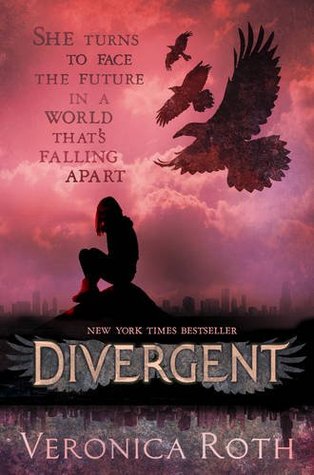
Divergent by Veronica Roth

Divergent (Divergent, #1)Age Group: YA
Genre: Dystopian
Pub Date: February 2012
Publisher: Harper Collins
                                                                            
I totally get the hype! However, I feel like it didn’t quite live up to everything I’ve seen about it. Don’t get me wrong, Divergent was a fantastic book, dull of everything I could have wanted from a dystopian novel: action, drama, and romance, and I really enjoyed it. My Youtube video explains why I didn’t feel it meet my expectations.

Divergent is about Tris, who lives in a world where everyone is divided into “fractions” based on their personality. Instead of choosing the selfless faction she was born into, Abnegation, Tris choses Dauntless, the brave nation. I really liked Roth’s world, I thought it was really clever, and thought-out, and I haven’t seen one like it. I would have liked more explanation about how the system came into place, but maybe that will happen in the sequels. 

The plot, pacing, and writing were amazing. It became addictive: I wanted to read on and on. There was never a dull moment in this book, as something was always happening. As much as the world was unique, I feel that the story wasn’t, but while I was reading it, I frankly didn’t care because I was having so much fun and there was enough twists to keep it unpredictable. The other reason why I didn’t care too much about the plot was because I felt the whole thing was about Tris and her discovery of herself.

Tris was a great female character. I often find dystopian books lose their sense of humour with the doom and gloom, but Tris was pretty funny. And good, and kind, and most importantly, flawed. I felt all of her actions were really true to her character; she was brave, yet not excessively heroic. Most importantly, despite living eons into the future, she was really relatable. She’s just a teenager struggling to find out who she is and where she belongs.

As for the romance? Well Four, Four, Four… It was impossible not to like Four. He’s got that whole bad-boy-with-a-heart-of-gold thing down. He also had great character development and loads of twists in his background. However, as much as I liked Four and Tris, I feel like there could have been some more background or development in the other characters. I would have loved to find out more about Tris’ family, or Christine, or even Eric. Roth created amazing characters, but left me hanging.

I think it’s the lack of connection I had with the other characters which gave me the emotional disconnection with most of the plot that wasn’t directly to do with Tris and Four. And this was the major flaw for me. The only emotion I felt during the whole book was “I’M SO EXCITED WHAT’S GOING TO HAPPEN NEXT”, while other dystopians have provided me with so much more.

Sum It Up: A must-read for dystopian lovers. I really loved the book, thought it was different and action-packed, but didn’t quite live up to the hype for me.

Rating: 8/10

Sunday, 21 July 2013

The Hundred Year-Old Man Who Climbed out of the Window and Disappeared by Jonas Jonasson

The Hundred-Year-Old Man Who Climbed Out of the Window and DisappearedAge Group: Adult
Genre: Humour
Pub Date: July 2012
Publisher: Hesperus Press
                                                                              
I think the best way to describe this book is a Swedish, black-comedy version of Forest Gump. The title sums up the beginning of the book pretty well, when Allan Karlsson leaves his nursing home and gets entangled in an adventure involving a suitcase of money, murder, thieves, a hot-dog retailer, and an elephant. The story is interspersed with tales from Allan’s past, involving some of the biggest events in history.

This is a very cleverly thought up book. I found Allan’s present day adventures fun, and his past was bizarre and strangely educational. I think the main issue with the plot was some of the jokes skimmed over the top of my head as I didn’t know enough of the 20th century history that was covered. I found the chapters I enjoyed the most were the ones that I had background knowledge too. However, there were lots of instances where anyone would find the situations hilarious, and as every good black comedy does, it made murder funny.

The main source of entertainment was Allan himself. He wasn’t a conventional comic character; it was his naivety and lack of interest (and fondness for vodka) that made him so funny. There was something unbelievable about him, the way he didn’t care for politics or religion or money, but it was that which made him a brilliant character. As for the supporting characters, well there was something a bit mad about all of them: whether it being a student in everything, or being a lack-wit that managed to take over a country. And it was the way that Jonasson made all these insane events seem realistic that made the book so engaging.

The only complaint I have is in the writing. I found myself loving the story, but at the same time I found the writing to lag or to have too much superfluous information. I ended up skipping over large paragraphs of text because I wasn’t that interested. If anything, this book did make me want to brush up on my history and politics, and I found it to be a good, unreliable source of events that I want to know about. The good thing about it being written by a Swedish author was that there was no British or American bias to the story, meaning that unlike Forest Gump, it was easier to get a fun and slightly more truthful story.

Sum It Up: A fun and witty story, perfect for those with an interest in history and politics, but for those who don’t, it can drag a bit.

Rating: 8/10

Friday, 3 May 2013

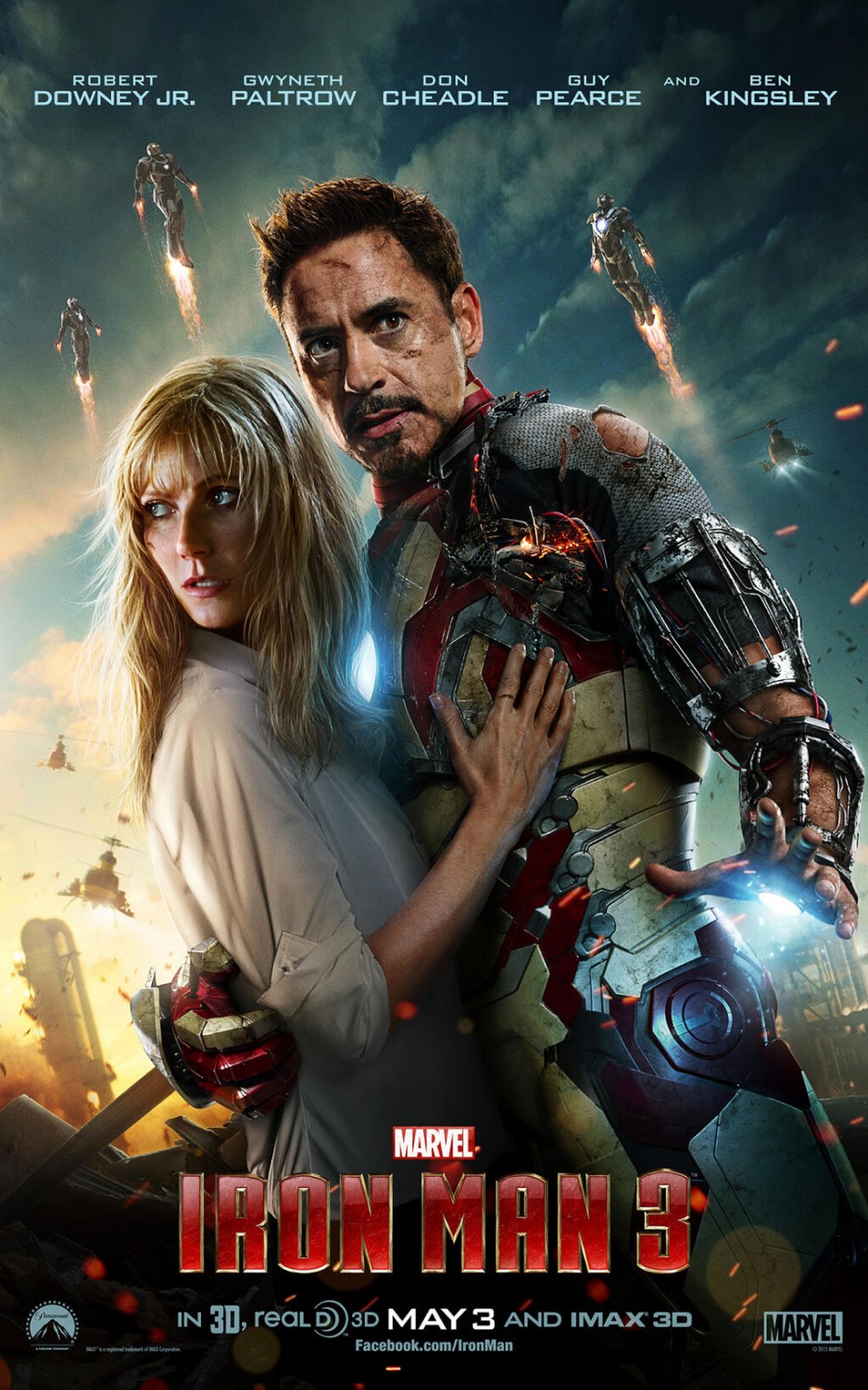
Iron Man 3 (2013)

Marvel had a lot to live up to after The Avengers. Iron Man was the first in the instalments, and brought to us witty dialogue, action, and a superhero plot. Each instalment had to match the previous, only to be completely tied together and blown out of the water by the epic Avengers. To say my expectations were high wouldn’t cover it.

Thankfully Iron Man 3 exceeded them.

Iron Man 3 takes place after the Avengers, and, without giving too much away, involves a lot of bio-technology jargon, explosions, and characters from Tony’s past. Shane Black and Drew Pearce has not let us down with hilarious not-quite-villains (Ben Kingsley I salute you), sharp one liners, and an twisting and turning superhero plot. The action sequences and special effects were a visual spectacle, and I would expect no less considering what they had pulled off with The Avengers.

As for the man himself? Downey Jr. was the Tony Stark that we all know and love. He was funny, he was egotistical, and he was human. And when we’re watching an iron suit, is an important thing to remember. I was glad to see Stark was affected by what happened in The Avengers, it gave the sense that Iron Man 3 was trying to stand by The Avengers, instead of trying to brush past it, as well as reminding us that our superhero was mortal. Tony Stark has always been my favourite Avenger, he always seemed to be the most robust character, the most charismatic, and in the end, the one you didn’t mind seeing a one man show of.

If anything, that’s the only negative I had to this film, the lack of development in most of the other characters. I really felt like they could have pushed a lot further with Pepper Potts and their relationship, instead of having her hanging on for her life in a sports bra and using her as a plot device to express Starks obsession with Iron Man. I suspect Paltrow is a better actress than the character shows off. Rebecca Hall’s character, Maya, had a strong start as strong female scientist, and then went absolutely nowhere. Guy Pearce as Killian, the villain, is a tricky one. I understood his motives and found him despicable enough to hate, but it felt that I hated his actions more than his character.

There were two secret stars to this film though: Ben Kingsley as the Mandarin, and Ty Simpkins as Harley, a 10 year old boy. I was utterly impressed by the way Kingsley moved effortlessly through the different dimensions of his character, and Simpkins, the first prominent child in a Marvel film, was intelligent, funny, and adorable.

Would I watch Iron Man 3 again? Yes. This film had what all Marvel films have, the enjoyment factor, which is hard to get anywhere else. Iron Man 3 may seem like a one man show at some points, but it's a damn good one.

Rating: 8/10