Monday, 30 December 2013

Updates and YA mini-reviews

You may have noticed that I have been absent from the internet recently. You may have not. If so, I’m not offended. So where have I been? University! Wooo!

I have been having a fantastic time. Such a fantastic time, that I now have no time. Between the 22 hours of contact time, the lab reports and coursework (this is what you get for choosing science), friends and extra-curriculars, I’m finding it to keep up, and I’ve just been lazy when it’s come to updating this blog and my Youtube channel. But with New Year’s around the corner, I am now determined to a better job of keeping up this blog and (hopefully) my Youtube channel. I say hopefully for Youtube because the walls in my halls of residence are so thin! So if anyone has some advice for me please let me know below.

I have also been a lazy reader. In the 3 months I was at university, I read three books one of which was on the train to and from London. To say I’ve been in a reading slump is to put it mildly. Luckily, the Christmas holidays have snapped me out of it, and I am on a roll.

So here’s the first part of my mini-reviews of what I’ve read.

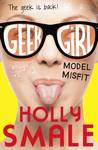
Geek Girl and Geek Girl (Model Misfit) by Holly Smale
Geek Girl (Geek Girl, #1)Model Misfit (Geek Girl #2)Geek Girl has been floating around the blogging circuit for a while and I now know why, it’s amazing! It’s funny and quirky (and not in a look-at-me-I’m-so-hipster kind of way). Harriet Manners is a geek (as you may guess from the title) and somehow ends up as a model, which of course is followed by several mishaps. I loved Harriet, especially once you peel off all the layers of facts and knowledge she was a normal, teenage girl. Geek Girl doesn’t take itself too seriously, but has a lot of heart.
I received Model Misfit from NetGalley 
Rating: 9/10

Heist Society by Ally Carter 
Heist Society (Heist Society, #1)Heist Society had an interesting concept, as we follow Kat, a retired teenage thief whose father has been framed for a crime he didn’t commit. As much as I found the plot interesting, I felt like there wasn’t much to the characters. Kat was emotionless and lacked much of a personality, and I found it hard to connect to her. Even the plot, though fast paced and clever in places, required too much suspension of belief for me to take it seriously. It was fun to read, but ultimately left me feeling let down.
 Rating: 6/10
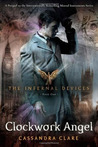
Clockwork Angel (The Infernal Devices, #1)Clockwork Angel by Cassandra Clare 
You may have noticed that I may be a tiney-winey (ok, massive) fan of The Mortal Instruments. So shockingly, I had not read the spin-offs. The reason for wanting to avoid them is that I’m not the biggest fan of historical fiction. Eventually I gave in and picked them up. I wanted to love it. Really, I did. And I did. Sort of. I really enjoyed the steampunk Victorian setting and the fast paced plot complete with a slippery villain. I loved all the characters, from book-loving Tess, to calm Jem, to strong Charlotte. The only problem I have is that I’m getting sick of love triangles. But I have high hopes for the rest of the series!
 Rating: 9/10


I have a lot of things coming up for this blog and I will get back into the swing of things, so stick around!

Thursday, 19 September 2013

Borrowed Time (2013)

Director: Jules Bishop
Writer: Jules Bishop
Starring: Philip Davis, Theo Barklem-Biggs, Juliet Oldfield 
Rating: 15

It’s times like this that I am grateful for Kickstarter. Just wow. Borrowed Time is a British independent film that features the writing and directing debut of Jules Bishop and tackles some of the social issues faced in Britain in a funny, upbeat, and gritty way. If you a British teenager, please go see this, you won’t regret it. It’s the film equivalent of a UKYA book. 

The story takes place in East London, and follows Kevin (Theo Barklem-Biggs), a guy who just wants to get his mother’s clock back for his sister after he pawned it away. Unfortunately, to get hold of the money to buy back the clock, he gets involved with “Ninja” Nigel (Warren Brown), and ends up owing him money. This leads him to cross paths with pensioner Phillip (Phil Davies) and an unlikely bond is formed. 

This is British film as it should be. Never afraid to tackle issues and it does it in an intelligent and witty way. And in a time where both youth and elderly are demonized by the rest of society, there couldn’t be a better time for it. This was writer and director Jules Bishop’s debut, and his vision was seen throughout. I attended a Q+A for the film, and he came from a similar background to the film, which could be seen through the honesty and social realism that he painted. It’s also very hard to describe how funny the film was, because it was funny in the way real life can be funny. It’s like those little moments you share with your mates, except it’s on the big screen.

There were some very strong characters seen through the film, whether it be nutty Ninja Nigel, or bitter Phillip, to shy, understated Kevin, and every part was well acted. The speech was very natural and clever, which I found impressive as I feel that usually young people’s speech can go awry in films. Phil Davies and Theo Barklem-Biggs was a strange pair, but they made it work. Most importantly, they channelled these very real issues affecting their characters and the prejudices each have towards each other.

On a small note, I also really loved the little motifs that cropped up. Time in the title, and time in the nature. The clock references were a constant reminder of the coming of age for Kevin, and the passing of time for Phillip. The film was also shot on 16mm film and not on digital, which basically meant that it had the grainy, traditional quality to a film. This added to the “rough-around-the-edges” feel it had.

In a time where “urban” films are dark and violent, it was refreshing to find one upbeat but never drawing away from the seriousness of the issues it tackled. For me, Borrowed Time addressed the real truth of London life, it’s dark and dangerous, but it’s still life, so it’s also sweet and fun. And it’s that range of emotions which ultimately captured my love. I can’t wait to see what Jules Bishop does next.

Overall: A clever, witty take on urban youth in London, and I thought it was simply fantastic.

Rating: 10/10

Sunday, 15 September 2013

Whistling Past the Graveyard by Susan Crandall

16058610Age Group: Adult (but it could be a YA read too)
Genre: Historical
Pub Date: July 2013
Publisher: Gallery Books
                                                                          
I’ve previously said how I’m not too keen on historical fiction. And every time I say that, I find a book that makes me change my mind. Whistling Past the Graveyard is a thought-provoking, emotional, witty novel set in the American Deep South in 1963.

Yes this book is about racism in 1960’s America. But it is also a coming-of-age story, about family and friendship. It also contains one of the most interesting POV’s in the genre, Starla, a nine-year-old, white girl. Being written from a child’s point of view, you may think that the writing would be too simplistic to enjoy, but Starla was full of personality. Her innocent view on the world was fascinating to see, and the comparisons to how she lived and the way the African-American’s did really highlighted the truth of the situation.  

The story follows Starla, who lives in Mississippi with her grandmother. Starla is fed up with her grandmother and wants to run away to Nashville to live with her mother. So she does exactly that. On her way she has a run in with Eula, a black lady who stole a white baby. And so they continue on their road trip together.

The characters were wonderful. Each had very strong, evocative voices. Starla was fiery and sassy, always questioning and never afraid. Eula perfectly contrasted with Starla, calm and stable, and was able to care for her in a way Starla never had before. Also, her background story was heart-breaking. But most important was the relationship that developed between them. Eula and Starla needed each other. Each had their lessons to teach to the other, and the transformation that happened was due to each other. At the heart of it, Whistling Past the Graveyard was about how friendship transcends the colour of skin and age.

Whistling Past the Graveyard had me on the edge of my seat. At some points it was so intense that I had to put the book down and think about what I had just read. There were so many strong messages in the book, but it was never in a preachy way. But I wouldn’t call it a dark novel. At some points it was funny, witty, and plain entertaining. It was the balance between grittiness and fun which made it so hard-hitting and memorable.

Overall: Even if you don’t like historical novels, I would recommend this to you. Whistling Past the Graveyard will make you think about life and race, and more incredibly it’ll come from the believable perspective of a nine-year old.

I received this book from Gallery Books via NetGalley in exchange for an honest review.

Rating: 10/10                                                    

Buy on Book Depository!

Wednesday, 11 September 2013

About Time (2013)

File:About Time Poster.jpgDirector: Richard Curtis
Producer: Tim Bevan, Eric Fellner, Nicky Kentish Barnes
Writer: Richard Curtis
Starring: Domhnall Gleeson, Rachel McAdams, Bill Nighy
Rating: 12A/ R
                                                                                       
So Richard Curtis has done it again and produced another great, feel-good fantasy-rom-comedy, but this time without Hugh Grant in sight.

Meet Tim, who discovers that all the men in his family can travel back in time to points in their own timeline. Tim then decides he will use his power for one goal: getting a girlfriend. The rest of the story is slightly predictable when it comes to Curtis, just like Notting Hill and Four Weddings and a Funeral, Tim falls for the all-American girl (and this one has a bizarre dress sense).

Did I enjoy this film? Yes. Did I have to suspend belief to enjoy it? Yes. About Time was genuinely very funny. The witty one-liners, the dry humour, and the occasional dash of slapstick captured British humour at its best. So comedy check. How about the romantic? Definitely check. MacAdams and Gleeson had great chemistry, which sizzled through the soppy through to the downright awkward parts of Tim and Mary’s relationship. So we’ve got a good rom-com. The fantasy? Nothing about the time-travel was explained, no real inventiveness was used with it, but once you accepted it, the plot moved along nicely.

Surprisingly the film was genuinely profound and moving. The characters were all endearing and likable, right down to pessimistic, grouchy, playwright Harry. Interesting points about life was raised, and it wasn’t just Tim and Mary’s relationship that was showcased. Bill Nighly as Tim’s father provided another dimension to the film, as we take a glimpse into a loving, albeit comical, father-son relationship.

Is it possible to be type-casted as a time-traveller’s wife? Because in the past five years Rachel MacAdams has managed to play the role twice, the first being in The Time Traveller’s Wife. Comparison is unavoidable. About Time is more quirky, profounder, and funnier, on top of having a more rounded plot, which takes a look further than the scope of one relationship. However, and this is a real sticking point with About Time, the relationship is far less realistic. Tim never tells Mary that he’s a time-traveller, and I was half-expecting a moment at the end where he tells her all the times he redone the events and they have a good giggle about it, and that never came. Truthfully, it’s a little creepy that he’s redone so much of their life together and she has no idea, no matter of his revelation at the end.

Ultimately, this was one of my favourite Curtis movies, and it has nothing to do with the lack of Hugh Grant. About Time is simply timeless (no pun intended) in themes, relationships, and humour, and as long as you take it with a pinch of salt (or sugar may be more apt here), it really is a great British film.

Overall: The only type of people who shouldn’t watch this are people who despise Richard Curtis films (unless they only hate them because they have Hugh Grant in them).

Rating: 8/10

Monday, 2 September 2013

My Life Through Book Crazes

So The Mortal Instruments has just been released, and Divergent, The Fault in Our Stars, The Book Thief, and Vampire Academy are in the pipeline. It’s clear that now’s the time for Young Adult book adaptations. So as we reread and wait, I thought I’ll take a trip down memory lane and look at the explosion of adaptations that have become a phenomena in my life so far.

Harry Potter
I guess my story, as many others my age, starts with the unforgettable series that is Harry Potter. I read The Chamber of Secrets in 1999, after seeing the press surrounding The Prisoner of Azkaban. And before you say anything, yes I read the second one before the first because my mother brought me back the wrong book. At age 6, it gave me nightmares, and I didn’t touch another Potter book for two years, until the movie release of The Philosopher’s Stone. Harry Potter was a big part of many people’s childhood, and in my case I literally grew up with it, with the last film being released when I was 17. I think the key reason why people loved it so much was because even though it was about a fantastical world, it was so relatable. And the world was astonishing! The amount of detail that was in it made you really connect with the world, and dare I say it, believe it could exist.

Twilight
The year was 2006, and I was in a bookshop when I saw a mysterious black book with white hands and an apple. I was 13 and new to YA, and this book grabbed my attention with how adult it looked. I picked it up and saw the words “vampire” and put it straight back down. For me, vampires were something out of a horror story, completely terrifying (flash-forward seven years and I still can’t watch horror films). Nevertheless, I was intrigued by the story and bought it. And I was obsessed. Back then, only Twilight and New Moon was out, so I was counting down the days to Eclipse. Honestly, I cannot remember for the life of me why I loved it so much. Maybe it was the forbidden love idea. Maybe it was because I had never read paranormal romance before. In fact, two years later, I was completely off it, so much so that I didn’t go see the movie. Not that one person’s changed attitude to it mattered, because the rest of my all-girls school had gone nuts. On the opening day, I swear my whole class flocked to the cinema. If you want to know about my current opinion of Twilight, look at my Goodreads rating for it.

The Hunger Games
Okay, I was late to the Hunger Games party; I heard about it a few months before the film was released. I have to say, I wasn’t quite as into it as other people were, I don’t know if it’s because I hadn’t read the books that long before I saw the film. But I was blown away with how different it was to all the other YA I had read before. I think the reason The Hunger Games took off like it did was because it came at the right time. Twilight-mania had died down, and after years of Bella Swan being thrust in our face, Katniss Everdeen was a breath of fresh air. There was a female heroine girls could aspire to, and an incredible action packed story for everyone to get behind. It was dark and moving, and I’m not surprised it did so well.

The Common Denominator
Nothing. Well, there is something. People buy into a good story. Oh, we’ve had flops. Beautiful Creatures and The Host being this year’s ones. I think something to note is that all of these “crazes” have happened with good time between them. Yeah, there’s been some overlap, but none of them have happened too close together.  Also all three are remarkably different from each other, which is why movie people (though I doubt any of them are reading this), should be less focused with looking for “the next…” and get something original out. I know the reason I didn’t see/ read Beautiful Creatures was because I saw the trailer and thought, “it looks like they’re trying to sell this as the next Twilight”. One other link is that people know about the book before the film. I think that’s quite easy to forget in the book community because we are always talking to people who have read the books, but an example is, despite nearly everyone I know online having read Divergent and for sure, TFioS, I know a few of my friends haven’t even heard of the books, but would definitely enjoy them.


What I’m saying is… Well, I don’t really have a point here. Since I’ve grown up with the boom in book adaptations and mania, and have been part of it, I’ve always been interested in it. It’ll be great to know what everyone else thinks on the whole matter, so leave some comments below!

Friday, 30 August 2013

Wonder by R.J. Palacio

17119852Age Group: Middle-Grade
Genre: Contemporary
Pub Date: Jan 2013
Publisher: Corgi Children's
                                                                            
August (or Auggie) Pullman is about to start his first year at middle-grade. However, unlike the rest of the kids starting middle-grade, this is going to be his first year at any school. The reason why? Auggie has a facial deformity, and enough medical conditions to fill an episode of House.

Auggie is a brilliant character; he is like any other 10 year old kid. He loves Star Wars, playing on his Xbox, and hanging out with his friends. It is his ordinariness in contrast with his illness which made the book so harrowing. Auggie knows exactly how people react to him, every gesture, every smile. He knows more medical words than me. So he created a bubble where he knows every person in his block to protect him from the world.

And school shattered that apart. Most of us have been to school. We know the story. The pain of fitting in, of finding your place. And we didn’t have Auggie’s face. But despite the stares and whispers, the cruel parents and school events, Auggie makes some friends. Wonder deals with the ordinary becoming extraordinary. Everyday events that you take for granted turns into torture for August, such as having school photos done or going to your sister’s play.

This book really highlighted that there are many types of people in the world. There are the good hearted ones, and then there are the ones who hate people for being different. But the world isn’t limited to that. There are people who are neutral, unsure, change sides and some who come out and surprise you. In a children’s book, you would expect a lot of black and white, but Palacio really highlighted the shades of grey.

Wonder is written from several points of view, which was important because it hits home the fact that Auggie isn’t the only person affected by his deformity. Via’s, Auggie’s sister, chapter highlighted this, as she struggled with her identity, and having to take care of herself, while defending and caring for Auggie. I thought all the characters were brilliant, and had their own unique view on life, which really contrasted against Auggie’s.

As a middle-grade book, the writing was fairly simple, yet there were enough variation to keep it interesting. The chapters are very short, and focuses on incidents, keeping you engaged. Then there were Mr Browne’s precepts, monthly ideas for his class to focus on, about kindness and truth, which really kept you focused on the theme of the story. As this book was for children, the book wasn’t as gritty as it could have been, but I don’t think that was the point. Wonder is about showing kindness, not shocking you with brutality.

This is a sad story, but it’s also happy, funny, thoughtful, and uplifting. And that rests in its sincerity. Nothing felt overdramatised, which would have been easy to do with a story which relies on children being cruel. I was taken on a journey of emotions with brilliant characters, and shown that the Wonder of people is not in how cruel they can be, but in how kind.

Overall: Just read it. Really, you won't regret it.

Rating: 10/10