Friday, 17 May 2013

Childhood Books

I would like to share some of my favourite books from my childhood, because, let’s face it, being a child is great for reading. This list has the added bonus of being a good guide for if you have any small children you need to buy books for. Who says I don’t make helpful blog posts?

Harry Potter by JK Rowling

Erm, do I need to say anything more? Magic, friendship, and good versus evil, Harry Potter captured my heart like it did with millions of others around the globe. It stretched my imagination, and took me into a beautiful, intricate world. More than that, Harry Potter showed me what it was like to grow and evolve. The series had its dark and bright parts, reflecting life in a not-so-magical world. Harry Potter may be set in a magical world, but its messages are all too real.


If there is one thing I look back on my childhood, it will be that I was exactly the right age to be in the true Pottermania spirit. I read my first Potter book when I was six and they remained an important part of my life until the last book was released when I was thirteen. I grew up with Harry, Ron, and Hermione, and entered a community filled with others who had done the same.
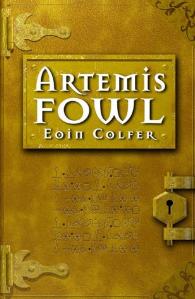

Artemis Fowl by Eoin Colfer

Along with Harry Potter and LOTR, Artemis Fowl planted the seed for what was going to become a long term love affair with the fantasy genre. It’s a story about a 12 year old criminal mastermind, Artemis Fowl, who kidnaps a fairy for ransom. He was the first anti-hero I met, whose sarcasm and conflicted nature blew my previous views of literature where the hero was always purely good, and the evil villain was always to be hated. For Colfer to show young children that the world is not black and white in such an engaging, action-packed, and funny (who can forget Mulch Diggums?) way was incredible.


I met Eoin Colfer for my thirteenth birthday, and got all of my books signed, and they still sit upon my bookshelf. Although I haven’t revisited Artemis in many years, and haven’t read the final book, I will always have a nostalgic memory of him.

Roald Dahl

I know this is an author, not a book, but it’s hard to pick one. His books are so incredible that they’re embedded into British consciousness. Golden ticket anyone?

Charlie and the Chocolate Factory, Matilda, The Twits, B.F.G, I could go on and on… Roald Dahl had an imagination unparalleled to anyone. To make up a fantastical world is one thing, but to take our mundane world and make it extraordinary is another. His books were about real children acting like real children, and he showed the cruelty that there was in the world (some parts of Matilda are strangely haunting). I particularly liked his more unknown stories such as Esio Trot and The Giraffe and The Pelly and Me.
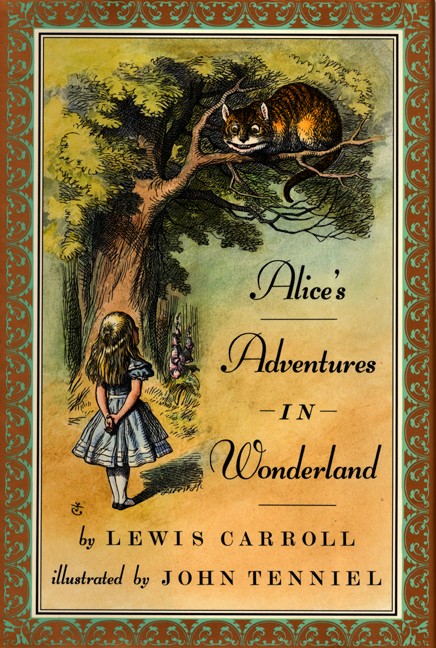

Alice’s Adventures in Wonderland by Lewis Carroll

 I don’t know how old I was when I first read Alice in Wonderland and Through the Looking Glass, but it left a deep impression and will forever remain my favourite classic books.  Unlike other classic books, AiW is forever timeless in its story. The strange and marvellous world brought life into immortal characters such as the Red Queen, the Queen of Hearts, the White Rabbit, Tweedle Dum and Dee… (I could go on), which will continue to be exciting to many generations of children and adults.

Another key point of the books is the reason Carroll wrote it. In the Victorian age, children’s books were meant to having meaning and a moral. These books had none. That doesn’t make them bad books, they were books written purely for a good story, and that was refreshing.


Honourable Mentions:
The Hobbit by J.R.R Tolkein
Inkheart by Cornelia Funke
Little Women by Louisa May Alcott
The Secret Garden by Frances Hodgson Burnett
A Little Princess by Frances Hodgson Burnett
Dr Suess

Jacqueline Wilson

Let me know your favourite children books!


Friday, 3 May 2013

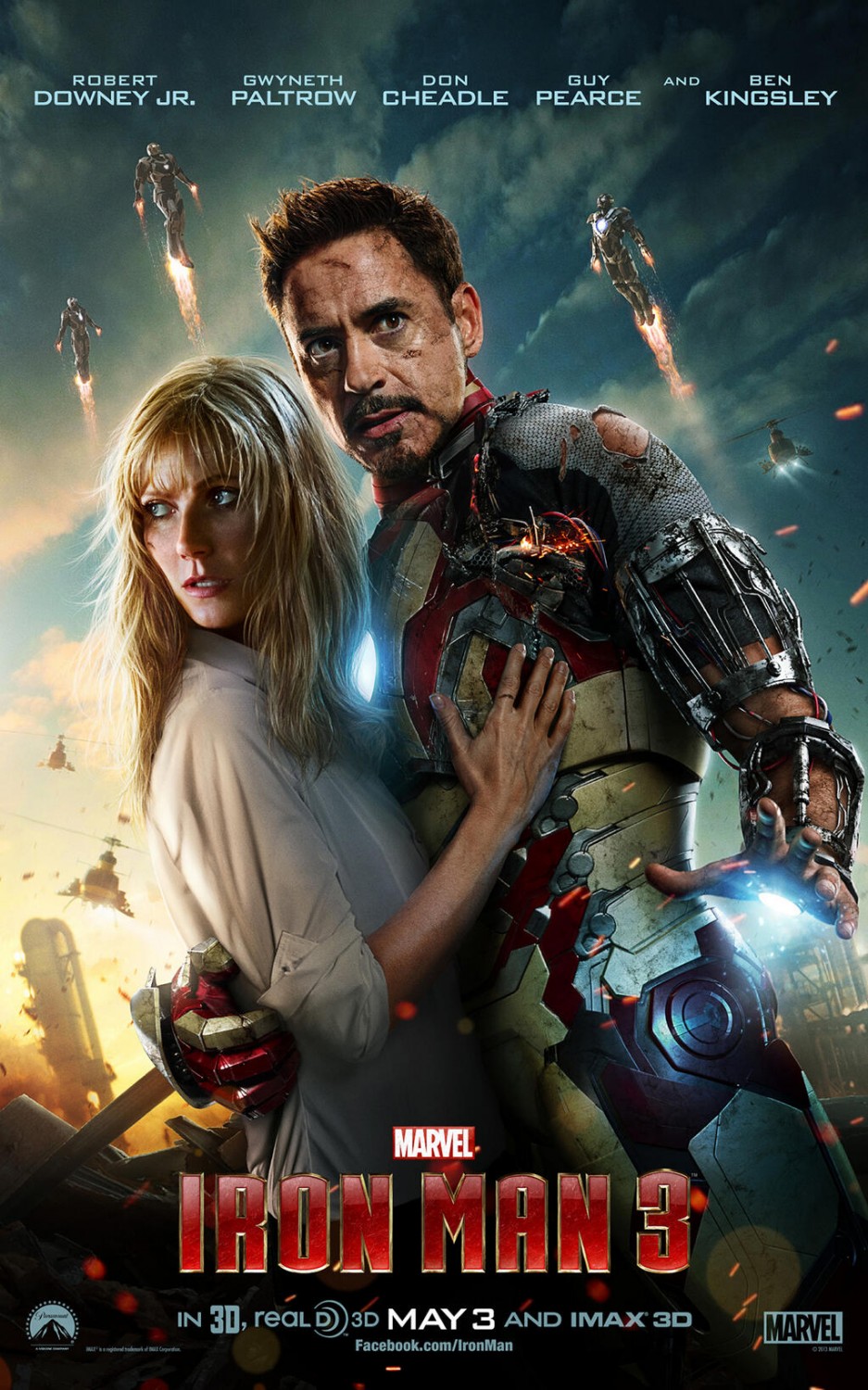
Iron Man 3 (2013)

Marvel had a lot to live up to after The Avengers. Iron Man was the first in the instalments, and brought to us witty dialogue, action, and a superhero plot. Each instalment had to match the previous, only to be completely tied together and blown out of the water by the epic Avengers. To say my expectations were high wouldn’t cover it.

Thankfully Iron Man 3 exceeded them.

Iron Man 3 takes place after the Avengers, and, without giving too much away, involves a lot of bio-technology jargon, explosions, and characters from Tony’s past. Shane Black and Drew Pearce has not let us down with hilarious not-quite-villains (Ben Kingsley I salute you), sharp one liners, and an twisting and turning superhero plot. The action sequences and special effects were a visual spectacle, and I would expect no less considering what they had pulled off with The Avengers.

As for the man himself? Downey Jr. was the Tony Stark that we all know and love. He was funny, he was egotistical, and he was human. And when we’re watching an iron suit, is an important thing to remember. I was glad to see Stark was affected by what happened in The Avengers, it gave the sense that Iron Man 3 was trying to stand by The Avengers, instead of trying to brush past it, as well as reminding us that our superhero was mortal. Tony Stark has always been my favourite Avenger, he always seemed to be the most robust character, the most charismatic, and in the end, the one you didn’t mind seeing a one man show of.

If anything, that’s the only negative I had to this film, the lack of development in most of the other characters. I really felt like they could have pushed a lot further with Pepper Potts and their relationship, instead of having her hanging on for her life in a sports bra and using her as a plot device to express Starks obsession with Iron Man. I suspect Paltrow is a better actress than the character shows off. Rebecca Hall’s character, Maya, had a strong start as strong female scientist, and then went absolutely nowhere. Guy Pearce as Killian, the villain, is a tricky one. I understood his motives and found him despicable enough to hate, but it felt that I hated his actions more than his character.

There were two secret stars to this film though: Ben Kingsley as the Mandarin, and Ty Simpkins as Harley, a 10 year old boy. I was utterly impressed by the way Kingsley moved effortlessly through the different dimensions of his character, and Simpkins, the first prominent child in a Marvel film, was intelligent, funny, and adorable.

Would I watch Iron Man 3 again? Yes. This film had what all Marvel films have, the enjoyment factor, which is hard to get anywhere else. Iron Man 3 may seem like a one man show at some points, but it's a damn good one.

Rating: 8/10

Thursday, 28 March 2013

The Death of Print?


A few days ago I attended an interesting talk at Ideas Tap (link below), which featured Bill Thompson (who works for the BBC World tech department), Tom Chivers (who runs an independent publishing house), and key members of thespace.org. And what they were discussing was how the digital age is going to change the way literature is conveyed.

I found the talk fascinating. I think what people don’t realise is that like everything in this era, literature is bound to change and evolve. I’m not saying the traditional forms (e.g. books and newspapers) are going to completely die out anytime soon, I’m just saying technology and this new society is going to open new doors to different art forms.

Don’t get me wrong, I love paper. I practically own a small library, but on the face of it, paper looks like it’s having a bad time.

With the launch of the internet, and information mauling us from every possible direction, physical newspapers are becoming more and more redundant. Why bother spending the money on a newspaper when you can go find it the information for free? This is reflected in newspaper sales over the past 10 years. Of course, with the launch of free newspapers, such as The Metro and The Evening Standard in London, I think that’s one reason newspapers are not going anywhere soon. As for the art of journalism? For as long as there is news to be reported (which is always), people will always want a legitimate, accurate, well written source to gain it from, whether it be on paper or on screen.


There is another reason why I think paper isn't going to go anywhere soon. On top of newspapers, I'm talking about the good old-fashioned book. People like paper. People like to feel a book or newspaper in their hands, to read a physical form. As they say, old habits die hard. But with the current generation learning to love e-readers, is that really going to stay around forever? I think books will start to be seen as an art form. People will want to buy good quality, crafted editions to keep as a physical manifestation of a story they love.

This brings me onto books and publishing. For many years, the publishing has worked like this: Writer à Agent à Publisher à Wholesaler à Retailer à Reader

But with the launch of e-books, and the connections the internet has provided, things are changing. Now any person can go and publish online, cutting out the majority of the middle man, and interacting directly with their readers. It’s cheap and you retain the majority of your sales. Or you can go to an agent or publishing house, and submit your material there. It’s probably better to do it via agents and publishers because, let’s face it; if you can be a writer, artist, PR, and editor, you’re probably a new breed of human. As for e-books itself, they’re becoming increasingly more and more popular. I would like to draw attention to this Stephen Fry quote: 'Books are no more threatened by the Kindle than stairs by escalators'. People use escalators because they’re faster and easier to use, but fundamentally they rely on technology. Which is renowned for being unreliable. So when our e-readers succumb to technological fault, or if we just fancy the healthier, quieter walk up the stairs, we will always have the reliable paper book.

The major downside to e-books is the key upside to e-publishing: the easiness of it. The quest for a good e-book is snared by the poor quality ones out there, unedited and not proof-read. I feel that self-published books may be looked down upon if quality dwindles significantly. Nevertheless, there are books of exceptional quality to keep the standard even. There is also the factor that the majority of e-books read are the ones which are sold through publishing houses, because they’re better quality, and the reader has the guarantee that someone else felt like it was a good book. They are also the ones which had the most time, effort, and money put into selling them, because they want the book to be a success for a whole chain of people. And that’s the thing, how much money do you want to make from your work? We’ve all heard the stats, 10%, 5%, 1% of books sent to an agent/ publishing house gets published, and in all honesty, those are the ones which are going to make the big bucks. But are you writing to be the next JK Rowling? Or are you writing to get your work out there and for some people to read it? I personally will keep trying with agents for my book, because I know I need help, and also I am a fan of the traditional book, but for many people they just want to get their work out there, and e-publishing is great for that.

I mentioned right at the beginning that the digital age is going to revolutionise literature. But how so? Because now with social networking, it is possible to connect dozens or hundreds of people who are all interested in the literature scene to gather together and form a community. Before poetry was confined to paper with an assortment of its peers, bound together for the occasional person to read, now it can be performed live, shared across websites, or photographed. People will wonder if this boundary pushing literature is valid.  Well, the purpose of literature is to tell a story, and before books were around people were acting them out, or painting them onto walls. Storytelling is evolving, and like all change, we must accept it.

It’s impossible to predict what exactly is going to happen in the future. I don’t think print will die, we’re all too nostalgic for that, but I think new and exciting doors will open, and I for one can’t want to see what will happen then.

P.S.
If you are a young, creative person aged 16-25 and live in Britain, I strongly recommend you join IdeasTap:

http://www.ideastap.com/

Wednesday, 20 March 2013

Books (In which I discuss the importance of)


If you follow me on Tumblr, you may have noticed that I have been taking part in the 30 day book challenge. For those of you who don’t know, the 30 day book challenge is about looking at books that have a meaning to you or that you have an opinion about, for 30 days. So this got me thinking, “why do people love books so much?”.

Books have been around for millennia and stories for even longer. On the surface, a book is a way of carrying information from one person to another, whether it is stories, ways to pass your exam, or a biography of somebody’s life. And that’s what people love. I believe that people who love reading also love to learn. I think that’s also where the popularity of non-fiction comes from, people’s curiosity. When you’re younger, people will encourage you to read because it “improves your English” (as my mum constantly used to say to me). But if you ask someone why they like fiction, that’s not the reason they’ll give you. So there has to be something more.

Fiction centres on stories. About made up characters and events, and even whole new worlds. People have been making up stories for as long as time itself. And there have been people listening to them for that same amount of time. When I was growing up, the main reason I loved reading was because I could escape from my boring life. I loved how for a few moments I could be in a different place, a different time, with a whole new bunch of people having an adventure. And that’s what books do, you could be sitting in your bedroom, but be in an alternative universe at the same time. As I got older, I realised I loved the meaning that can be gained from a book. Again I was learning, but not about the best way to structure a sentence for my English exam, but about the world and all the good and bad things there are in it. You get to walk in another person’s shoes for an entire story, and to see the world from a different perspective.

When I’m old, and if somebody asks me a defining event that happened while I was growing up, I have no doubt I will say “Harry Potter”. Which brings me to my next point: the book community. People want to talk about books, whether if it’s discussing Snape’s motives for killing Dumbledore (it’s been 8 years guys), or why one character is better than the other. Books are there for the sharing. We want our friends to share our excitement, to see if they share our reaction. And since Harry Potter, reading has never been cooler. The excitement before each book release, the pouring over pages, and the waiting for each film, means that Pottermania is a part of my childhood that I’ll never forget.

The technological age has given a whole new dimension to the book community. You like an obscure book? Well someone else in the world must have read it, even if no one in your day to day life has. The internet provides discussion, reviews, and ideas which you can contribute and become a part of. Booktubers on Youtube will give us a consistent review online. Fanart and fanfiction will be produced and written. Books are there to be shared and now we can share them with the entire world.

So overall, how do I rate books? Well I can see no downsides to them; they provide entertainment, teachings, and a community, and for that it would have to be 10/10.